
The Importance of Rest: Why High Performers Need to Slow Down to Speed Up
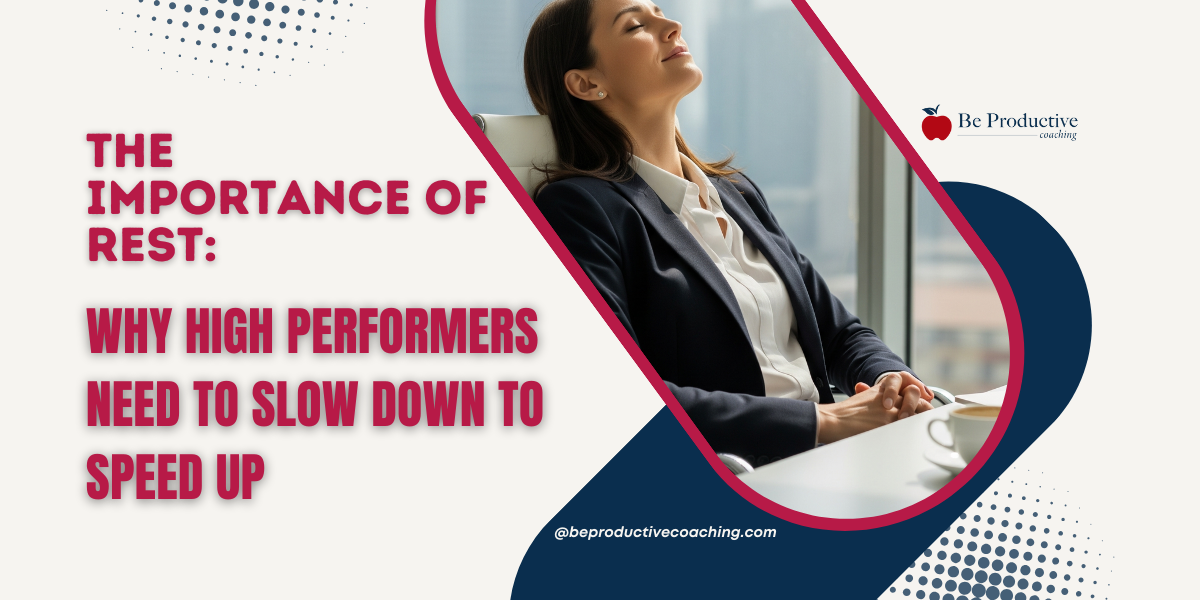
The Importance of Rest: Why High Performers Need to Slow Down to Speed Up
For many professionals, rest is often the first thing sacrificed in the name of productivity. Deadlines, meetings, and personal commitments pile up, and rest feels like a luxury that doesn’t fit on the calendar. But in reality, consistent rest isn’t optional—it’s essential.
In the same way that physical training requires recovery for muscles to grow, your brain and body need intentional downtime to function at their best. Without it, even the most disciplined routines can lead to burnout, poor decision-making, and diminished performance.
My Journey with Rest
As a high achiever in the hospitality industry, I remember working long hours, rarely taking breaks, and balancing a demanding job with an equally active social life. Back then, I didn’t prioritize or even value rest. I would often go to work on just 4 to 6 hours of sleep, staying late at the office, believing that pushing through was part of the job.
Over time, my body started sending clear signals—migraines, heart palpitations, and other symptoms of burnout. It wasn’t until 15 years into my career that I truly understood the importance of rest—not just sleep, but all the different ways our minds and bodies need to recover. Now, I treat rest as a non-negotiable part of my lifestyle. I aim for 8 hours of sleep, block breaks into my calendar, avoid working on Sundays, and protect my energy with intention. Rest has become one of my greatest tools for focus, resilience, and leadership.
Rest and Your Brain: The Neuroscience of Recovery
Rest isn’t just about pausing—it’s about how your brain processes information when you’re not actively working. Neuroscientific research shows that during periods of rest:
The brain consolidates memory and learning, helping you retain information better.
The default mode network becomes more active, a region linked to self-reflection, creativity, and problem-solving.
Cognitive fatigue is reduced, increasing your capacity to focus and process complex decisions later.
Neglecting rest can slow down neural recovery, weaken attention spans, and limit creative thinking—all critical functions for professionals who make decisions, lead teams, and solve complex problems daily.
Pro Tip: Incorporate 5–15 minute mental breaks between deep work tasks to allow your brain to reset and stay sharp.
Rest Builds Resilience and Regulates Stress
High performers often operate under high stress, which—when unmanaged—leads to emotional exhaustion, irritability, and eventually burnout. Rest plays a central role in resetting the nervous system, allowing your body to shift from a constant state of alert to a place of calm.
When you rest:
- Cortisol levels (the stress hormone) begin to stabilize.
- Heart rate and blood pressure decrease, supporting long-term health.
- Your capacity for emotional regulation increases, allowing for better reactions under pressure.
Without this regulation, professionals often find themselves reactive instead of strategic, which can erode leadership effectiveness and interpersonal relationships.
Pro Tip: Try incorporating at least 10 minutes of intentional stillness or deep breathing during your workday—especially after high-stakes conversations or decisions.
Chronic Rest Deprivation Reduces Strategic Thinking
When you’re overworked and under-rested, your decision-making suffers. Leaders who skip rest are more likely to experience:
- Decision fatigue—a decline in the quality of choices after prolonged periods of decision-making
- Tunnel vision—difficulty seeing alternative solutions or long-term implications
- Impulsivity—rushing into actions without adequate reflection
These cognitive costs don’t just affect you—they ripple across your team or organization. Making time to step back is often the most strategic move you can make.
Pro Tip: Block out 30 minutes each week for “thinking time”—a rest-based activity where you step away from to-do lists and simply reflect or journal.
The Different Types of Rest You Need
Sleep is only one type of rest. To perform at your best, you need a variety of rest types that replenish different parts of your mind and body. These include:
- Physical rest: Sleep, naps, or gentle movement
- Mental rest: Breaks from concentration, like a walk or screen-free time
- Sensory rest: Reducing stimuli such as screens, noise, or bright lights
- Emotional rest: Safe spaces to express how you’re feeling without pressure
- Creative rest: Inspiration from nature, art, or new environments
Each of these types serves a different function—and neglecting one can lead to imbalance.
Pro Tip: Do a quick self-check: Which type of rest are you craving most this week? Schedule it in, just like a meeting.
Rest and the Culture You Create
Your relationship with rest doesn’t just affect you—it shapes your workplace culture. Whether you lead a team or collaborate with others, your approach to rest sends a message.
- Do you take real lunch breaks, or eat while working?
- Do you send emails late at night, or model clear work-life boundaries?
- Do you encourage recovery after busy seasons or normalize burnout?
Intentional rest sets a tone. It promotes psychological safety, encourages sustainability, and demonstrates that effectiveness doesn’t require exhaustion.
Pro Tip: Lead by example. Share how you recharge and encourage your team to do the same. Collective rest habits shape healthier, more productive environments.
Rest Is A Strategic Advantage
If you’re constantly busy but rarely feeling your best, it may be time to rethink how you approach rest. The goal isn’t just to avoid burnout—it’s to create the conditions where your performance, creativity, and leadership can actually thrive.
Rest doesn’t take you off track. It puts you in the right condition to lead with clarity, make better decisions, and show up fully—for yourself and for others.
Now is the time to treat rest not as a reward, but as part of your leadership system.
Looking to build healthier performance habits without sacrificing results? Be Productive Coaching helps high-achieving professionals and teams create success that’s sustainable—not just impressive on paper. Let’s start with a conversation.