

The Executive Time Block How High Performers Reclaim Focus in a Noisy World

The Executive Time Block: How High Performers Reclaim Focus in a Noisy World

The Executive Time Block: How High Performers Reclaim Focus in a Noisy World

In high-stakes leadership, your calendar isn’t just a productivity tool—it’s a strategic filter. Every meeting you take, every task you prioritize, every minute you allow to pass without intention sends a message about your leadership style, your goals, and your values.

The truth is: You don’t rise in your career by doing more. You rise by doing what matters—consistently.

This is where executive-level time blocking comes in. For professionals navigating promotions, leading teams, or preparing for their next move, mastering your calendar is not optional—it’s foundational.

What Is Time Blocking—Really?

Most people hear “time blocking” and think of color-coded calendars or Pomodoro timers. But for leaders, it’s much deeper.

Time blocking is a proactive decision-making system that helps you:

Focus on high-impact activities that move your career forward

Reduce cognitive overload and multitasking

Increase energy by aligning your calendar with your purpose

Build leadership presence through intentional structure

Rather than reacting to tasks or meetings as they come, you assign specific time slots for the most essential work—before the noise takes over. It’s about building boundaries that protect your energy and align your daily actions with your long-term goals.

My Time Blocking Story

My younger sister is a middle school teacher, and every time I open my calendar in front of her, she cringes and says it gives her anxiety. What she doesn’t know is that time blocking is the secret to my success—and not everything on my calendar is work or boring.

Years ago, I learned the value of keeping one master calendar that integrates my entire life—personally and professionally. That means scheduling time not just for meetings or deliverables, but also for wellness, reflection, creativity, and rest. Sometimes, I’ll even create a simple “Time Block” as a flexible buffer for anything that may come up or to carve out space for strategy, reflection, or even listening to a podcast.

If something needs more intention, it gets a name and a timeframe. The most important part? Honoring those blocks. Keeping boundaries with myself is what ensures I don’t ignore what matters—even when no one else is watching.

The Hidden Cost of an Overcrowded Calendar

Let’s be honest—most high performers live in reactive mode. We say yes to too many things, fill our calendars with back-to-back meetings, and convince ourselves that we’re being productive because we’re always busy.

Here’s the problem:

Focus suffers. Constant context-switching decreases decision quality.

Energy drains. Without recovery time, burnout is inevitable.

Strategic work gets delayed. Urgent often wins over important.

You stop leading—you start managing. Your time becomes dictated by others’ agendas.

If you don’t intentionally design your time, your calendar becomes a reflection of other people’s priorities—not yours.

The Executive Time Block Framework

This framework is based on patterns I’ve seen across hundreds of high-achieving professionals I’ve coached—from directors to C-suite. It’s built for clarity, leadership effectiveness, and mental resilience.

1. 🧠 The CEO Hour

Time Commitment: 1–2 hours per week
Purpose: Strategic thinking, vision setting, and alignment

This is your private leadership meeting—with yourself. Block this time at the start or end of your week to reflect, re-align, and forecast.

What to include:

  • Weekly review: What worked, what didn’t, and why?
  • Priority planning: Identify 1–3 goals that truly move the needle.
  • Decision-making prep: What key choices do you need to make?
  • Leadership alignment: Are your actions aligning with your executive presence and goals?

🔹 Why it matters:

Many leaders drift because they stop checking in with themselves. The CEO Hour keeps you rooted in strategy, not just execution.

Bonus Tip: Treat this like a non-negotiable meeting. No reschedules. No multitasking.

2. 🚀 Growth Blocks

Time Commitment: 1–3 hours per week
Purpose: Career development, visibility, and brand positioning

If you’re not growing, you’re plateauing. These time blocks are for the kind of work that builds your future—even if no one’s demanding it right now.

Examples:

  • LinkedIn content creation to build thought leadership
  • Skill building: certifications, leadership programs, coaching
  • Strategic networking: meaningful conversations with peers, mentors, sponsors
  • Interview prep or negotiation research
  • Reviewing personal brand assets (bio, resume, online presence)

🔹 Why it matters:
Growth is often the first thing leaders cut when they’re busy—and the one thing they most need for sustainable success.

Bonus Tip: Block these during your mental high-performance windows (e.g., morning focus time).

3. 🎯 Focus Blocks

Time Commitment: 60–90 minutes, 2–4x/week
Purpose: Deep work that requires attention, clarity, and decision power

These blocks are for projects that require you—not your distracted self. Whether it’s strategic planning, preparing a team presentation, or developing a new business idea, this is when your brain is sharpest.

How to structure:

  • Block 90-minute chunks with zero interruptions
  • Shut down notifications
  • Clarify one clear outcome for each session
  • Debrief with a short journal note or voice memo: What did you complete?

🔹 Why it matters:
Research shows that multitasking lowers productivity by up to 40%. These blocks reduce decision fatigue and help you enter a state of flow.

Bonus Tip: Use this time for what only you can do. Delegate the rest.

4. 💆🏽♀️ Resilience Blocks

Time Commitment: 15–30 minutes daily
Purpose: Mental clarity, emotional regulation, and energy management

Resilience isn’t built during time off—it’s built in the micro-moments we give ourselves throughout the day.

Examples:

  • Morning mindset rituals (prayer, journaling, breathwork)
  • Non-screen lunch breaks
  • Walks after intense meetings
  • Afternoon resets or micro-naps

🔹 Why it matters:
Your ability to lead under pressure is directly linked to your ability to self-regulate. Time blocking space to restore your energy is not a luxury—it’s a leadership investment.

Bonus Tip: Color-code these on your calendar so they stand out and you honor them.

🔄 Ready to Implement? Try This:

15-Minute Calendar Audit

Look at your next 5 business days and ask:

  • Do I see at least one CEO Hour?
  • Have I scheduled any time for growth, focus, or resilience?
  • Are my top 3 leadership priorities reflected anywhere?

Then schedule:

🔹 1 CEO Hour
🔹 1 Growth Block
🔹 2 Focus Blocks
🔹 1 Resilience Block

Just start there. You’re not aiming for perfection—only progress.

Structure is Strength

The most successful leaders don’t do more. They do what matters most—with discipline.

Time blocking is not just a scheduling tool. It’s a leadership decision system that helps you:

  • Advance your career intentionally
  • Protect your energy from burnout
  • Create space to lead, not just react
  • Build momentum—even during transitions or setbacks

When you master your calendar, you reclaim your clarity—and your confidence.

Let’s Build Your Time Blocking System

If you’re ready to align your time with your goals, visibility, and leadership growth, let’s do it together.

👉 Book a 1:1 Executive Strategy Session with me and I’ll help you create a personalized time-blocking system that fits your leadership role, goals, and mental energy.

The Importance of Rest Why High Performers Need to Slow Down to Speed Up

The Importance of Rest: Why High Performers Need to Slow Down to Speed Up

The Importance of Rest: Why High Performers Need to Slow Down to Speed Up

For many professionals, rest is often the first thing sacrificed in the name of productivity. Deadlines, meetings, and personal commitments pile up, and rest feels like a luxury that doesn’t fit on the calendar. But in reality, consistent rest isn’t optional—it’s essential.

In the same way that physical training requires recovery for muscles to grow, your brain and body need intentional downtime to function at their best. Without it, even the most disciplined routines can lead to burnout, poor decision-making, and diminished performance.

My Journey with Rest

As a high achiever in the hospitality industry, I remember working long hours, rarely taking breaks, and balancing a demanding job with an equally active social life. Back then, I didn’t prioritize or even value rest. I would often go to work on just 4 to 6 hours of sleep, staying late at the office, believing that pushing through was part of the job.

Over time, my body started sending clear signals—migraines, heart palpitations, and other symptoms of burnout. It wasn’t until 15 years into my career that I truly understood the importance of rest—not just sleep, but all the different ways our minds and bodies need to recover. Now, I treat rest as a non-negotiable part of my lifestyle. I aim for 8 hours of sleep, block breaks into my calendar, avoid working on Sundays, and protect my energy with intention. Rest has become one of my greatest tools for focus, resilience, and leadership.

Rest and Your Brain: The Neuroscience of Recovery

Rest isn’t just about pausing—it’s about how your brain processes information when you’re not actively working. Neuroscientific research shows that during periods of rest:

The brain consolidates memory and learning, helping you retain information better.

The default mode network becomes more active, a region linked to self-reflection, creativity, and problem-solving.

Cognitive fatigue is reduced, increasing your capacity to focus and process complex decisions later.

Neglecting rest can slow down neural recovery, weaken attention spans, and limit creative thinking—all critical functions for professionals who make decisions, lead teams, and solve complex problems daily.

Pro Tip: Incorporate 5–15 minute mental breaks between deep work tasks to allow your brain to reset and stay sharp.

Rest Builds Resilience and Regulates Stress

High performers often operate under high stress, which—when unmanaged—leads to emotional exhaustion, irritability, and eventually burnout. Rest plays a central role in resetting the nervous system, allowing your body to shift from a constant state of alert to a place of calm.

When you rest:

  • Cortisol levels (the stress hormone) begin to stabilize.
  • Heart rate and blood pressure decrease, supporting long-term health.
  • Your capacity for emotional regulation increases, allowing for better reactions under pressure.

Without this regulation, professionals often find themselves reactive instead of strategic, which can erode leadership effectiveness and interpersonal relationships.

Pro Tip: Try incorporating at least 10 minutes of intentional stillness or deep breathing during your workday—especially after high-stakes conversations or decisions.

Chronic Rest Deprivation Reduces Strategic Thinking

When you’re overworked and under-rested, your decision-making suffers. Leaders who skip rest are more likely to experience:

  • Decision fatigue—a decline in the quality of choices after prolonged periods of decision-making
  • Tunnel vision—difficulty seeing alternative solutions or long-term implications
  • Impulsivity—rushing into actions without adequate reflection

These cognitive costs don’t just affect you—they ripple across your team or organization. Making time to step back is often the most strategic move you can make.

Pro Tip: Block out 30 minutes each week for “thinking time”—a rest-based activity where you step away from to-do lists and simply reflect or journal.

The Different Types of Rest You Need

Sleep is only one type of rest. To perform at your best, you need a variety of rest types that replenish different parts of your mind and body. These include:

  • Physical rest: Sleep, naps, or gentle movement
  • Mental rest: Breaks from concentration, like a walk or screen-free time
  • Sensory rest: Reducing stimuli such as screens, noise, or bright lights
  • Emotional rest: Safe spaces to express how you’re feeling without pressure
  • Creative rest: Inspiration from nature, art, or new environments

Each of these types serves a different function—and neglecting one can lead to imbalance.

Pro Tip: Do a quick self-check: Which type of rest are you craving most this week? Schedule it in, just like a meeting.

Rest and the Culture You Create

Your relationship with rest doesn’t just affect you—it shapes your workplace culture. Whether you lead a team or collaborate with others, your approach to rest sends a message.

  • Do you take real lunch breaks, or eat while working?
  • Do you send emails late at night, or model clear work-life boundaries?
  • Do you encourage recovery after busy seasons or normalize burnout?

Intentional rest sets a tone. It promotes psychological safety, encourages sustainability, and demonstrates that effectiveness doesn’t require exhaustion.

Pro Tip: Lead by example. Share how you recharge and encourage your team to do the same. Collective rest habits shape healthier, more productive environments.

Rest Is A Strategic Advantage

If you’re constantly busy but rarely feeling your best, it may be time to rethink how you approach rest. The goal isn’t just to avoid burnout—it’s to create the conditions where your performance, creativity, and leadership can actually thrive.

Rest doesn’t take you off track. It puts you in the right condition to lead with clarity, make better decisions, and show up fully—for yourself and for others.

Now is the time to treat rest not as a reward, but as part of your leadership system.

Looking to build healthier performance habits without sacrificing results? Be Productive Coaching helps high-achieving professionals and teams create success that’s sustainable—not just impressive on paper. Let’s start with a conversation.

Leading Effectively During the Uncertainties of 2025 Navigating Fear and Negativity with Purpose

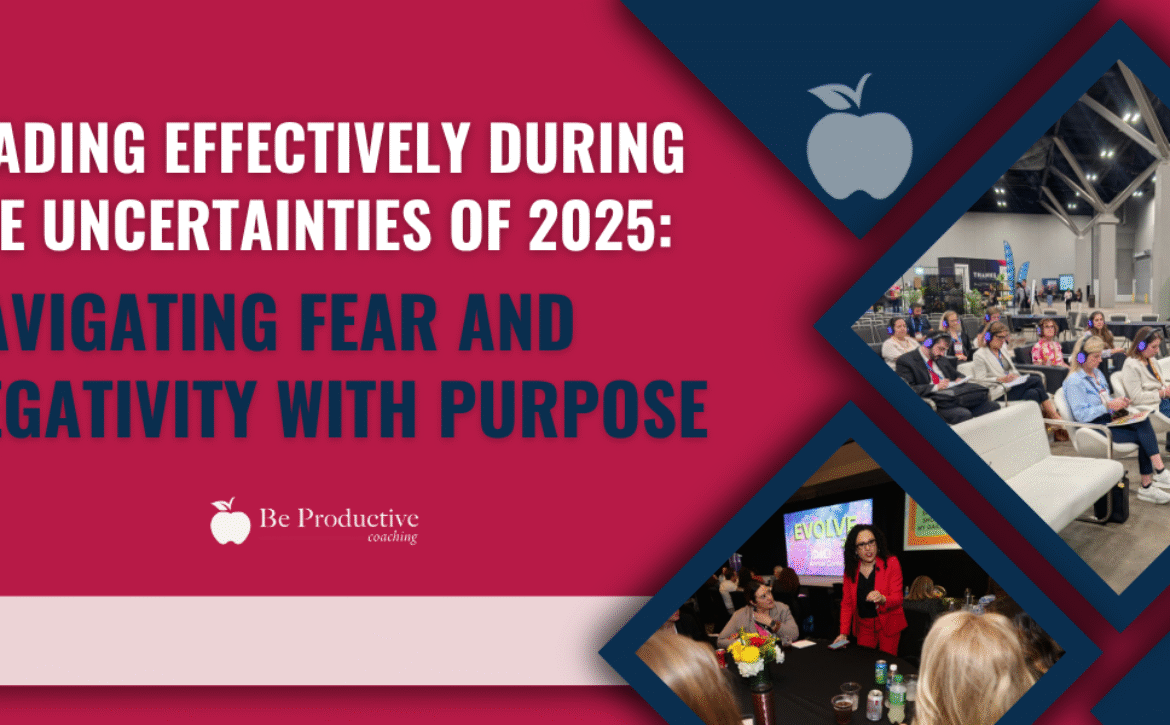
Leading Effectively During the Uncertainties of 2025: Navigating Fear and Negativity with Purpose

Leading Effectively During the Uncertainties of 2025: Navigating Fear and Negativity with Purpose

Let’s face it: 2025 didn’t come with a roadmap.

This year has been marked by economic shifts, political tension, AI disruption, organizational restructuring, and unpredictable global headlines—enough to make even the most seasoned professionals pause. And that’s without even touching on the challenges in our personal lives. But for now, let’s focus on our roles as leaders.

For leaders, this means navigating more than just strategy and KPIs—it’s about guiding teams through emotional uncertainty, resistance to change, and a steady hum of fear and negativity that can quietly seep into even the strongest cultures.

But here’s what I remind my clients all the time: uncertainty isn’t new—it just feels more visible right now. And how you lead through it will define the culture, energy, and impact of your leadership long after the chaos settles.

This isn’t about being fearless. It’s about being anchored.

So, if you’ve been wondering how to lead effectively when fear is rising and negativity feels contagious, I’m going to share a few strategies that helped me lead through 9/11, the 2008 financial crisis, and the onset of COVID-19 in 2020—so keep reading.

6 Ways to Lead with Purpose Through Uncertainty

Uncertainty doesn’t call for perfection. It calls for intention. And the most effective leaders are the ones who lead not just with strategy, but with heart, presence, and clarity. Here are six ways to lead your team—and yourself—through the uncertainty of 2025:

1. Acknowledge the Elephant in the Room: Fear

Let’s start here, because most leaders try to skip this part.

When challenges hit, it can feel counterproductive to name what’s uncomfortable. But silence doesn’t create safety—it creates disconnection. Fear thrives in the unknown, and when you leave too much unsaid, people fill in the blanks with worst-case scenarios.

As a leader, your power lies not in pretending things are fine, but in acknowledging what’s real without being consumed by it.

Try saying something like:

“We’re all feeling the pressure right now. But this is exactly the kind of moment that calls for strong communication, mutual support, and aligned focus.”

That small shift—from avoiding fear to naming it with confidence—builds trust fast.

2. Create Emotional Safety Before Driving Results

Uncertainty stirs up insecurity, and people will naturally start to protect themselves—guard their ideas, retreat from collaboration, avoid risk. That’s human. But fear-driven teams are not innovative or productive. They’re just surviving.

Your job isn’t just to set goals—it’s to create the kind of environment where people feel safe enough to reach for them.

This requires you to lead with empathy, not ego.

Take time to check in. Listen to understand—not to respond. Validate concerns without turning meetings into therapy sessions. And then re-center the conversation around clarity, control, and forward motion.

🔹 “What’s one thing within our control this week?”

🔹 “Where do we need clarity to move forward?”

🔹 “How can we support each other through this?”

These types of questions shift the energy from helplessness to possibility.

3. Respond—Don’t React

The most dangerous leadership trap during uncertain times? Reactive decision-making.

You’ve probably felt it: the urgency to act quickly, say something reassuring, pivot on the fly. But rushed decisions—especially those rooted in fear—often backfire. They confuse your team, compromise your long-term strategy, and diminish your credibility.

Instead, build in reflection time. Even five minutes of pause can give you the clarity you need to respond with intention.

I often coach my clients to ask:

  • “What does this situation require from me as a leader—not just as a problem-solver?”
  • “Is my next move aligned with our bigger picture—or am I just trying to quiet the noise?”

Great leadership isn’t about having immediate answers. It’s about modeling calm in the face of chaos.

4. Build Mental Fitness—Because Mindset Is Strategy

Here’s where Positive Intelligence (PQ) becomes one of the most transformative tools in your leadership toolkit.

When you strengthen your mental fitness, you develop the capacity to notice your own mental patterns—the inner critics and saboteurs that show up under stress—and shift toward a calmer, wiser, more creative part of your brain (your Sage).

If you’ve ever found yourself snapping at a teammate, obsessing over control, or procrastinating on tough conversations—you’re not alone. Those are all signs of untrained mental fitness.

But the good news? You can rewire those patterns.

Even short PQ reps—like focusing on your breath for 60 seconds before a meeting—can shift your mindset in real time. And when you do this consistently, your team begins to mirror your energy. You become the emotional thermostat, not the thermometer.

This isn’t soft skill fluff. This is strategy in action.

5. Clarify the Mission—Then Repeat It

When times feel uncertain, people crave clarity. And as a leader, it’s your responsibility to deliver that clarity—again and again.

Don’t assume people remember the “why” behind the work. In fact, assume they’ve forgotten it amidst the noise. Your job is to repeat the mission, anchor every decision to the bigger picture, and make sure your team knows where they’re headed—even if the road looks different than expected.

Communicate your vision often. Over-communicate your priorities. Keep it simple, actionable, and rooted in purpose.

“Here’s what we’re focusing on right now.”
“Here’s why it matters.”
“Here’s how we’ll get there—together.”

6. Be Human, First

Finally—and perhaps most importantly—remember that your title doesn’t exempt you from the emotional toll of uncertainty.

You’re allowed to feel it, too. You just don’t have to lead from it.

Leading effectively during uncertain times doesn’t mean having all the answers. It means showing up with presence, with empathy, and with purpose. It means being the kind of leader who leads with people—not just over them.

And that kind of leadership is not only possible—it’s needed now more than ever.

Beyond Fear: Steer Your Leadership with Intention. Strengthen your leadership – schedule your free call now!

Fear and negativity will always show up—but they don’t get to drive the direction of your leadership. You do.

So, as you move through the rest of 2025, I invite you to lead with intention. Choose to be grounded instead of reactive, empathetic instead of dismissive, and clear instead of chaotic.

Your team doesn’t need perfection.
They need you—present, purposeful, and anchored in what matters.

You’ve got this.

Are you ready to strengthen your leadership and navigate uncertainty with more resilience and clarity? I’d love to help you. Let’s connect. Book your free leadership clarity call today!

Feeling Stuck at the Top Here’s the Career Strategy High-Achievers Are Using to Grow Smarter—Not Harder

Feeling Stuck at the Top? Here’s the Career Strategy High-Achievers Are Using to Grow Smarter—Not Harder

Feeling Stuck at the Top? Here’s the Career Strategy High-Achievers Are Using to Grow Smarter—Not Harder

You’ve checked all the boxes: impressive title, years of experience, strong business acumen, and a proven record of results. But lately, something feels off. Maybe the work no longer fuels you. Maybe you’re craving more impact or feeling underutilized. Or maybe—despite all your qualifications—you’re just not moving forward.

If this resonates, you’re not alone. In my work as an Executive and Career Coach, I’ve seen countless high-achieving professionals, directors, and executives reach a point where success no longer feels aligned. The challenge? Most don’t know how to recalibrate without losing momentum.

The good news is, there is a way forward. And it doesn’t require starting from scratch—it requires starting with strategy.

Here’s the career growth framework I use with clients to create clarity, elevate leadership, and accelerate results—without burning out in the process.

1. Strategic Clarity: The Power Move Most High Performers Overlook

High-achievers are conditioned to move fast. They’re often the fixers, the doers, the ones who “figure it out.” But when it comes to your own career, that same forward-motion mentality can become a liability.

Before you can make your next big move, you need to get ruthlessly clear on why you’re making it—and where you’re going.

Strategic clarity means understanding what success looks like now, not five years ago. What was once your dream role may now be your comfort zone. And comfort zones don’t lead to growth.

I’ve worked with VPs who climbed the ladder only to realize the view from the top wasn’t what they wanted. I’ve coached directors transitioning industries who were chasing roles that looked good on paper but felt completely misaligned in practice.

Strategic clarity means looking beyond your title or paycheck and asking:

  • What kind of problems do I want to solve?
  • Where do I create the most value?
  • What work energizes me—and what drains me?

This is not fluff—it’s the foundation. Without clarity, your strategy is just a bunch of tactics that keep you busy, not fulfilled.

ACTION STEP: Set aside 30 uninterrupted minutes this week to reflect on these prompts:

  • What do I want my next role to feel like—not just look like?
  • What strengths or skills am I not using enough?
  • How does my current career path align with the leader I want to become?

It might feel uncomfortable to slow down. But clarity is a form of power—and the first step to getting intentional about your next move.

2. Executive Branding: Your Reputation Is Your Leverage

Let’s be real—your résumé isn’t getting you the job. Your reputation is.

Today’s decision-makers are looking for leaders who not only get results but also embody strategic thinking, emotional intelligence, and executive presence. That’s why having a cohesive, intentional personal brand is non-negotiable.

Too many high-level professionals rely on job descriptions and outdated bullet points to tell their story. But at the executive level, what matters most is how well you communicate your value—consistently, across platforms.

A strong executive brand answers three key questions:

  1. What do I stand for as a leader?
  2. What business outcomes have I consistently driven?
  3. Why should someone trust me with their biggest challenges?

This branding should show up in your:

  • LinkedIn headline and “About” section
  • Résumé executive summary
  • Elevator pitch and networking conversations
  • Interview responses

BRAND SHIFT EXAMPLE:
Instead of: “Experienced Operations Director with 15 years in manufacturing”
Say: “Operational Leader Driving Cost Savings & Culture Transformation Across Global Teams | Lean Six Sigma Black Belt”

This positions you as a strategic asset, not just an experienced professional.

ACTION STEP: Choose one branding element this week—LinkedIn, résumé, or your intro—and ask:

  • Does this reflect the level of leadership I bring?
  • Am I showcasing impact, not just tasks?
  • Would a decision-maker instantly understand the value I bring?

If not, it’s time for a rebrand. And if you need support, my Career Branding Essentials package is built for this exact transformation.

3. Interviewing at the Executive Level: Think Influence, Not Just Information

Interviewing isn’t just about having the right answers—it’s about commanding the conversation with confidence and clarity.

Executives aren’t hired based on credentials alone. They’re hired because they fit the vision and because they can navigate complex challenges with poise, persuasion, and presence.

Yet, so many professionals—even seasoned leaders—walk into interviews focused on “sounding smart” or listing every bullet point on their résumé. That approach won’t help you stand out.

What works? Strategic storytelling. Positioning yourself as a problem-solver, not a job seeker. Communicating your leadership story with intention, structure, and results.

ACTION TIP: Practice using this STAR+I framework:

  • Situation: What was the high-level business context?
  • Task: What was your objective or responsibility?
  • Action: What strategic steps did you take?
  • Result: What measurable outcomes were achieved?
  • Impact: Why did it matter to the business or team?

Now, practice out loud. Notice your tone. Are you owning the room—or just hoping for approval?

Executive presence is less about sounding polished and more about demonstrating clarity, confidence, and strategic value. You’re not interviewing for a job; you’re offering a solution to a high-stakes problem.

4. Build Mental Resilience to Navigate Setbacks and Lead with Strength

Burnout. Imposter syndrome. Second-guessing. Even the highest performers face these challenges—but few talk about them openly.

That’s why I integrate mental fitness training into every coaching engagement. Because success isn’t just about skill—it’s about stamina. It’s about bouncing back from rejection, setbacks, or uncertainty without losing your edge.

Using the Positive Intelligence® framework, I help clients identify their internal Saboteurs—the inner critics that undermine confidence and performance—and build their mental “Sage” muscle: the part of the brain wired for focus, creativity, and calm leadership.

RESILIENCE INSIGHT: High-achievers often silence their emotions to stay productive. But ignoring stress doesn’t make it go away—it makes it louder. Emotional agility is a leadership skill, not a liability.

When you build mental resilience, you lead with more clarity. You recover faster from stress. And you become a more grounded, effective leader.

ACTION STEP: Identify your top Saboteur (like the Hyper-Achiever, Controller, or Pleaser). Ask:

  • How is this showing up in my day-to-day?
  • What impact is it having on my relationships and leadership?
  • What would shift if I led from my calm, confident self instead?

Mental resilience isn’t just about self-care. It’s a strategic advantage—one that separates reactive leaders from adaptive ones.

5. The Right Support Speeds Up Your Success

You can absolutely try to navigate your career evolution on your own. But here’s what I know from working with hundreds of high-achieving professionals:

  • You’ll move faster with a coach.
  • You’ll go deeper with the right structure.
  • You’ll show up bolder when someone sees the leader you already are.

Whether you’re transitioning roles, preparing for a promotion, rebranding your executive identity, or rebuilding your energy after burnout—having a coach in your corner is not a luxury. It’s a strategic investment in your next level.

At Be Productive Coaching, my 4-step method is designed for professionals like you:

  1. Clarify your career vision
  2. Build a targeted strategy
  3. Elevate your brand and interview presence
  4. Strengthen your mindset and resilience

Clients have gone from stagnant to unstoppable—landing new roles in under 6 months, transitioning into dream industries, negotiating 5- and 6-figure salary increases, and stepping into leadership with renewed clarity and purpose.

If you’re ready to stop guessing and start growing with intention, the time to take action is now.

Next Step: Let’s Strategize Your Growth

Your career deserves more than just momentum. It deserves alignment. Leadership. Impact.

You’ve done the work to get here. Let’s get strategic about what comes next.

Own Your Narrative How High-Achievers Build Personal Brands That Open Doors

Own Your Narrative: How High-Achievers Build Personal Brands That Open Doors

Own Your Narrative: How High-Achievers Build Personal Brands That Open Doors

At a certain level in your career, it’s not just about your qualifications—it’s about your presence. Senior professionals, executives, and high-performing leaders know that standing out in today’s market means going beyond a resume. You must craft a compelling narrative about who you are, what you stand for, and the value you deliver.

That’s where personal branding comes in—not as a superficial exercise, but as a strategic tool for career growth, influence, and leadership impact.

What Is a Personal Brand—Really?

Let’s get one thing straight: your personal brand is not a logo, a buzzword, or your job title.

Your personal brand is the sum of your leadership style, your values, your unique strengths—and how all of that is perceived by others. It’s the impression you leave in the boardroom, the voice that resonates in your industry, and the reputation that precedes you when opportunities arise.

In short, your brand is the narrative people tell about you when you’re not in the room. And as a senior-level professional or executive, you can’t afford to let that narrative write itself.

Your brand should answer questions like:

  • What is the core value you bring to an organization or team?
  • How do you inspire trust and credibility?
  • What’s the leadership story you want others to hear, see, and feel?

When these answers are aligned, your personal brand becomes a powerful tool for influence and advancement.

Step 1: Conduct a Brand Audit

Before you can refine or elevate your brand, you need to understand your current brand landscape. This means taking a strategic look at how you are perceived—and where you may need to close the gap between perception and intention.

Here’s how to begin:

  • Review your online presence: What message does your LinkedIn profile, website bio, or social media communicate? Are they consistent and up to date?
  • Assess internal touchpoints: Look at your email tone, presentation style, and meeting participation. Do they reflect a leader who communicates with clarity and confidence?
  • Gather feedback: Ask 2-3 trusted colleagues or mentors: “What three words come to mind when you think of my leadership?” or “What impact do you think I bring to the table?”

The insights you gather here will become the foundation for shaping an intentional, strategic personal brand.

Step 2: Craft Your Signature Leadership Narrative

Once you have a clear understanding of your current brand presence, the next step is to define the leadership story you want to tell.

A compelling narrative isn’t about listing credentials or accomplishments—it’s about demonstrating impact and transformation. Your story should help people understand:

  • What motivates you
  • What problems do you solve best
  • How your leadership creates lasting results

Use this simple but powerful framework to write your leadership brand statement:

“I help [who] achieve [what result] by [your unique strength or approach].”

For example:
“I help senior teams drive organizational clarity during times of change by integrating emotional intelligence with strategic planning.”

This statement isn’t just for your LinkedIn headline—it should be woven into your interviews, networking conversations, performance reviews, and even casual introductions.

The goal is not memorization, but alignment. When your leadership story is clear to you, it becomes clear to everyone else.

Step 3: Align Your Brand Across All Touchpoints

Personal branding is not confined to the digital space. Every professional interaction, presentation, and decision contributes to your brand.

To strengthen your brand consistency:

Online

  • Optimize your LinkedIn profile with a value-based headline and a compelling “About” section.
  • Use your feed to share thought leadership: articles, insights, project highlights, or team wins that showcase your expertise.

Resume and Executive Bio

  • Ensure your documents reflect your current brand narrative and leadership level.
  • Highlight measurable outcomes and strategic contributions, not just responsibilities.

Conversations and Presentations

  • Use storytelling to communicate your impact—frame your achievements in the context of transformation and results.
  • Speak with intentionality. Make sure your tone and messaging reflect the values you lead with.

Team and Organizational Culture

  • Model your brand daily. If you’re known for being a values-driven collaborator, demonstrate that in every meeting.
  • Consider how your leadership style contributes to (or detracts from) your desired brand identity.

Pro tip: Google yourself. What comes up? Is it aligned with the type of influence and presence you want in your industry?

Step 4: Strengthen the Internal Brand—Your Mindset

Even the most polished external brand will falter if it’s not supported by a confident internal narrative.

Many high-performers quietly battle imposter syndrome, perfectionism, or the pressure to constantly over-deliver. These mindset challenges can unintentionally sabotage how you show up and lead.

A strong personal brand is rooted in a mentally resilient mindset. This means:

  • Reframing self-doubt when it surfaces
  • Shifting from reaction to intention in challenging situations
  • Building mental fitness through consistent mindset practices

At Be Productive Coaching, I work with leaders using the Positive Intelligence® framework to rewire their mindset and unlock calm, focused leadership. The leaders who make the biggest impact? They’ve strengthened their inner game just as much as their external brand.

Step 5: Be Consistent and Visible

Once you’ve clarified your brand, don’t let it sit in a file or on a bio—it needs to be lived.

Consistency and visibility are key. Here’s how:

  • Show up regularly on platforms where your audience is active—LinkedIn, conferences, panels, and podcasts.
  • Start small. Share a post, comment on an industry thread, or offer insights in a virtual roundtable.
  • Find a rhythm that feels authentic. You don’t need to broadcast daily—but you do need to contribute with intention.

Remember: Visibility isn’t vanity. It’s leadership.

The leaders who are remembered are the ones who are seen and heard.

You Already Have a Brand—Make Sure It Works for You

You don’t have to be famous to have a powerful personal brand. But if you’re serious about career growth, leadership influence, and attracting aligned opportunities, your brand must be intentional.

Whether you’re stepping into a new executive role, re-entering the job market, or leading a high-performing team, your brand should work just as hard as you do.

Your experience already speaks volumes. Now, it’s time to shape the message people actually hear.

Because when you own your narrative, you don’t chase opportunities—they recognize you.

📩 Want support clarifying your leadership brand? Let’s talk: beproductivecoaching.com

Beyond Strategy Mental Fitness Habits That Fuel Sustainable Leadership

Beyond Strategy: Mental Fitness Habits That Fuel Sustainable Leadership

Beyond Strategy: Mental Fitness Habits That Fuel Sustainable Leadership

Leadership Isn’t Just Strategy—It’s Mental Stamina
As leaders and high-achieving professionals, we’re taught to focus on goals, execution, and results. But here’s what often gets overlooked: the mental resilience required to lead well, especially under pressure. The higher up you go, the more critical it becomes to develop mental fitness habits that fuel clarity, confidence, and consistency. In my work as a Career & Executive Coach, I help professionals build not just leadership skills but the inner strength to lead with intention, adaptability, and composure.

Whether you’re navigating high-stakes decisions, leading through organizational change, or managing burnout, mental fitness is what gives you the stamina to lead with integrity and impact. Let’s explore five foundational habits that can help reset and recharge your leadership mindset.

1. Start with a Mental Warm-Up (Before You Open Email)

Your morning routine sets the tone for your leadership energy throughout the day. Instead of diving into email or meetings the second you start work, take 5–10 intentional minutes to anchor your mind and reset your internal compass. This can include:

  • Deep breathing or box breathing exercises (inhale for 4, hold for 4, exhale for 4, hold for 4)
  • Visualizing a calm, confident version of yourself handling the day’s key challenges.
  • A short journaling prompt: “What kind of leader do I want to be today?”

Think of this as your leadership warm-up—like stretching before a workout. It helps you move through your day with more purpose and less reactivity.

2. Reframe Stress into Data

Stress is inevitable at senior levels—but how you interpret it is optional. High-performing professionals often internalize stress as a personal failure. But what if stress is simply feedback? A signal that something’s misaligned?

Instead of suppressing or overanalyzing stress, use this quick mental model:

  • Pause: Acknowledge the emotion without judgment.
  • Label: Name what you’re feeling (e.g., overwhelmed, frustrated, anxious).
  • Ask: “What is this emotion trying to tell me? What might need to change?”

By shifting from emotion to inquiry, you create space for strategic thinking instead of spiraling into overdrive. Stress becomes a cue, not a crisis.

3. Set Boundaries Like a CEO

You don’t need to be available all day to prove your leadership value. In fact, protecting your energy is part of your role as a strategic leader. Boundaries are not about withdrawal—they’re about focusing your effort where it matters most.

Here are a few boundaries that high-performing leaders I coach commonly adopt:

  • No meetings before 10 am to allow for strategic planning, focused work, or personal wellness 
  • A digital sunset: logging off Slack, email, or Teams by 7pm
  • Time-blocking for reflection and long-range thinking
  • Clear communication with team members on when and how to escalate issues

Boundaries model leadership discipline. They also give your team permission to respect their own energy—which ultimately drives better results.

4. Build Micro-Recovery Into Your Calendar

Many executives treat their calendar like a game of Tetris—stacking blocks of productivity without building in breathing room. The problem? Without rest, decision-making becomes reactive, creativity dips, and emotional regulation plummets.

Start scheduling short recovery rituals between blocks of intense work or meetings. Some ideas:

  • A 10-minute walk outside between back-to-back Zooms
  • Listening to calming music while closing your eyes
  • A few minutes of mindful breathing or stretching at your desk
  • A “transition pause” after work to decompress before shifting into home life

Micro-recovery isn’t laziness. It’s brain optimization. These small moments create cognitive space that fuels sharper thinking and emotional regulation.

5. Don’t Go It Alone: Build a Trusted Inner Circle

One of the biggest misconceptions about leadership is that you have to carry the weight alone. The truth? Even top-performing leaders need trusted spaces to decompress, reflect, and gain perspective.

Your inner circle might include:

  • An executive coach who challenges your blind spots and helps realign your goals
  • A peer mentor you can have honest, non-performative conversations with
  • A mastermind group or leadership forum where shared wisdom keeps you grounded

These connections aren’t just emotional support—they’re strategic assets. They help you course-correct faster, build resilience through shared experience, and stay anchored during turbulent times.

Build Inner Strength to Lead with Impact

Leadership in 2025 and beyond isn’t about having all the answers—it’s about cultivating the mental strength to navigate uncertainty, stay centered, and lead from a place of calm confidence. These five mental fitness habits aren’t about adding more to your to-do list. They’re about refining how you show up.

Start with one habit this week. Build consistency. Reflect on what shifts for you.

If you’re a senior leader, executive, or high-performing team member feeling the weight of nonstop pressure—know this: resilience can be built. Confidence can be restored. And your next level of leadership can be one rooted in strength, clarity, and intention.

Need help building a reset plan that aligns with your leadership goals? Let’s connect and co-create your executive edge.

Let’s Work Together

I help high-achieving professionals strengthen their leadership, overcome burnout, and navigate transitions with clarity and purpose. Book a consultation or learn more at Be Productive Coaching.

Conquer Procrastination, Unleash Your Peak Performance

Conquer Procrastination, Unleash Your Peak Performance

Conquer Procrastination, Unleash Your Peak Performance

As a high-achieving professional, executive, or leader, you’re driven by results. You set ambitious goals, you strive for excellence, and you understand the value of time. Yet, even the most accomplished among us can fall prey to procrastination – that subtle thief of productivity and potential. It’s not about laziness; for high-performers, procrastination often stems from a complex interplay of factors like perfectionism, fear of failure, overwhelm, or even a lack of clarity on the next strategic move.

I’m Vimari Roman, a Career & Executive Coach, and I partner with leaders like you to navigate these very challenges. I’ve seen firsthand how overcoming procrastination isn’t just about getting more done; it’s about reclaiming your energy, sharpening your focus, and ultimately, accelerating your career trajectory and leadership impact.

Let’s dismantle procrastination and build a framework for sustained action and peak performance.

Why High-Achievers Procrastinate: Beyond the Obvious

It’s easy to beat ourselves up over procrastination, but understanding the root cause is the first step towards conquering it. For the high-achievers I work with, common triggers include:

  • Perfectionism Paralysis: The desire to produce flawless work can be so overwhelming that starting becomes the hardest part. “If I can’t do it perfectly, why bother starting?” This mindset can stall crucial projects and hinder career progression.
  • Fear of Failure (or Success!): For leaders, the stakes are high. The fear of not meeting expectations – or conversely, the fear of the increased responsibility that comes with success – can lead to avoidance. This can be particularly acute during career transitions or when stepping into a more significant leadership role.
  • Overwhelm & Lack of Clarity: A packed schedule, multiple high-stakes projects, and a lack of clear prioritization can make it difficult to know where to begin. This is especially true for executives managing complex team dynamics and organizational goals. Procrastination becomes a coping mechanism.
  • Decision Fatigue: High-level roles demand constant decision-making. Sometimes, the sheer volume of choices leads to putting off important, non-urgent tasks, impacting long-term strategic goals and personal branding efforts.
  • Misaligned Tasks: Working on tasks that don’t align with your core strengths, values, or strategic objectives can drain your motivation, leading to procrastination. This is a critical area to address for improving mental resilience and avoiding burnout.

Actionable Strategies to Conquer Procrastination & Elevate Your Performance

Enough with the theory. Let’s get to the “how.” These are strategies I implement with my clients to drive tangible results:

The “5-Minute Rule” – Ignite Momentum

  • The Strategy: Commit to working on a dreaded task for just five minutes. Often, the inertia of starting is the biggest hurdle. Once you begin, you’ll likely find yourself continuing.
  • Career Application: Use this for tasks like starting that daunting market research for a career pivot, outlining a challenging presentation for the board, or initiating a difficult conversation with a team member. It breaks down overwhelming tasks into manageable first steps.

Time Blocking & Prioritization – The Eisenhower Matrix Revisited

  • The Strategy: Don’t just make a to-do list; schedule dedicated blocks of time for your most important tasks. Differentiate between Urgent/Important, Important/Not Urgent, Urgent/Not Important, and Not Urgent/Not Important. Focus your prime energy on “Important/Not Urgent” – these are your strategic growth activities.
  • Leadership Application: This is crucial for C-suite and Directors. Block time for strategic thinking, team development, and personal brand building, not just reactive fire-fighting. It ensures your leadership efforts are proactive, not just reactive.

Break It Down – Micro-Goals for Macro Impact

  • The Strategy: Deconstruct large, intimidating projects into smaller, actionable steps. Achieving these micro-goals provides a sense of accomplishment and builds momentum.
  • Interview Confidence Application: Preparing for a series of high-stakes interviews? Break it down:

Week 1: Research target companies.

Week 2: Update STAR stories. 

Week 3: Mock interviews. 

This structured approach reduces anxiety and builds confidence incrementally.

Identify Your “Productivity Zone” & Protect It

  • The Strategy: Determine when you are most focused and energetic. Is it early morning? Late evening? Dedicate this “prime time” to your most challenging and important tasks, minimizing distractions.
  • Mental Resilience Application: Honoring your natural energy cycles prevents burnout. Forcing high-cognitive work during low-energy periods fuels procrastination and stress. This strategy is key to sustainable high performance.

Tackle the “Frog” First – Inspired by Brian Tracy

  • The Strategy: Identify your most challenging or unpleasant task for the day (the “frog”) and do it first. Accomplishing this provides a significant mental boost and makes the rest of your day feel more manageable.
  • Overcoming Setbacks Application: Faced a career setback? The “frog” might be analyzing what went wrong or reaching out to your network. Addressing it head-on builds resilience and opens doors to new opportunities.

Accountability & External Support – Leverage Your Network (or a Coach)

  • The Strategy: Share your goals with a trusted colleague, mentor, or coach. Knowing you have to report on your progress can be a powerful motivator.
  • Team Collaboration & Leadership Effectiveness: For teams, establishing clear accountability structures and regular check-ins can significantly reduce collective procrastination and boost overall productivity. As a leader, fostering this environment is key.

Procrastination is a Barrier to Your Next Level

Overcoming procrastination is not just about ticking off more tasks. It’s about:

  • Strengthening Your Leadership: Demonstrating decisiveness, focus, and effective time management.
  • Enhancing Your Personal Brand: Being known as someone who delivers consistently and strategically.
  • Improving Mental Resilience: Reducing stress and overwhelm by taking control of your workload and priorities.
  • Boosting Interview Confidence: Approaching preparation with a structured, proactive mindset.
  • Accelerating Career Growth: Consistently taking the actions that move you towards your most ambitious goals.

Ready to Move from Procrastination to Peak Performance?

Which of these strategies will you implement today? Don’t let another opportunity pass you by.

If you’re ready to develop a personalized action plan to dismantle procrastination, strengthen your leadership, and achieve your most ambitious career goals, I invite you to book a complimentary consultation. Let’s unlock your full potential.

From Doer to Driver The Leadership Leap That Changes Careers

From Doer to Driver: The Leadership Leap That Changes Careers

From Doer to Driver: The Leadership Leap That Changes Careers

In the early stages of your career, success is often measured by how much you can do. You get rewarded for delivering quickly, responding efficiently, and being the go-to person who gets things done.

But if you’re aiming for senior leadership or an executive role, that approach eventually hits a ceiling. At some point, doing more isn’t what moves you forward— leading differently is.

This is where many high-performing professionals get stuck. They’re operating as exceptional doers when their next career leap requires them to become strategic drivers.

So, what does that transition actually look like—and how do you make it without losing momentum?

🧠 The Doer vs. Driver Mindset: What’s the Real Difference?

Understanding the difference between a doer and a driver is the first step to evolving your leadership identity.


Doer

Driver

Focus

Tasks, execution, day-to-day work

Strategy, outcomes, big-picture thinking

Strength

Reliability, responsiveness, detail orientation

Vision, influence, delegation, decision-making

How they show value

“I got it done”

“I moved us forward”

Risk

Burnout, stagnation, limited visibility

High-impact visibility, leadership growth

Most professionals begin their careers as doers—handling workload, solving problems, managing deliverables. But staying in this mode too long can limit your upward mobility, especially as you move into senior or executive-level roles.

💡Why Making This Shift Matters for Career Growth

If you’re a high achiever, this shift may feel counterintuitive. After all, “doing it all” has gotten you this far. But here’s what I often share with my coaching clients:

Your next promotion won’t come from your task list. It will come from how you lead, influence, and think.

Remaining in doer mode can hold you back in ways that may not be obvious:

  • You stay busy—but not strategic
  • You limit your capacity to grow and scale
  • You train your team to rely on you, rather than lead with you
  • You’re seen as reliable—not visionary

The goal is not to do less, but to do differently—so that your leadership potential becomes visible, valuable, and promotable.

📘 Educational Insight: What Makes Someone a “Driver”?

Drivers are leaders who:

✔️ Focus on long-term outcomes rather than short-term tasks
✔️ Delegate effectively to free up time for strategic thinking
✔️ Empower others rather than micromanage
✔️ Influence across departments and levels
✔️ Anticipate problems before they arise
✔️ Align their work with the organization’s goals

They lead with vision, prioritize impact, and have the emotional intelligence to navigate complex dynamics. These are the people tapped for bigger opportunities—not just because they can lead, but because they already are.

🛠️ How to Start Making the Leap

Here’s how to begin transitioning from doer to driver in practical, manageable steps:

1. Shift from Task Execution to Outcome Ownership

Start evaluating your work by the outcome it’s tied to, not just what needs to be done. For example, instead of:

“I completed the report,” try:
“I designed a reporting process that helps the leadership team make data-driven decisions faster.”

Ask yourself:

  • What’s the business purpose behind this work?
  • Who needs to be influenced or informed to move it forward?

2. Start Delegating with Purpose

Delegation isn’t about dumping tasks—it’s about building leadership in others and creating space for your own growth. If you’re always the one executing, you’re limiting your strategic capacity.

Try this:

  • Identify 2–3 tasks that can be passed to someone on your team
  • Use that time for strategic activities: stakeholder conversations, planning, or innovation

This also builds trust and develops future leaders—one of the marks of a great driver.

3. Increase Strategic Visibility

Doers often fly under the radar. Drivers are known for their thinking, not just their doing.

To increase your visibility:

  • Lead a cross-functional meeting
  • Present insights, not just status updates
  • Proactively share solutions that align with business goals

The more you position yourself as someone who can think beyond your role, the more others will see you as leadership material.

4. Build Influence Across the Organization

Drivers build relationships outside their immediate teams. They collaborate cross-functionally, mentor peers, and contribute to the culture.

Ask yourself:

  • Who do I need to know to grow?
  • How am I building influence outside of my job description?

Leadership is about who you impact—not just what you produce.

🛍️ Self-Coaching Questions to Reflect On

  • Where in my day-to-day am I still operating as a doer?
  • What responsibilities could I delegate to free up strategic space?
  • Am I leading conversations that shape direction—or just giving updates?
  • How visible is my leadership across departments or with key stakeholders?

Transitioning from doer to driver isn’t about abandoning execution. It’s about elevating how you show up—with intention, strategy, and influence. This leadership leap is one of the most important shifts in any high-achieving professional’s career.

If you’re already delivering results, now is the time to align your work with leadership behaviors that get noticed, respected, and promoted.

💬 Ready to Lead Differently?

If you’re in a growth phase and unsure how to make this leap, let’s talk. I offer 1:1 leadership strategy sessions to help you gain clarity, shift your mindset, and move from tactical to transformational leadership.

📩 Book your session here and let’s build your roadmap to leadership growth.

Negotiation Power Moves How to Ask for What You Deserve with Confidence

Negotiation Power Moves: How to Ask for What You Deserve with Confidence

Negotiation Power Moves: How to Ask for What You Deserve with Confidence

As high-achieving professionals, executives, and leaders, you’ve already demonstrated the drive and talent to reach significant heights in your careers. You’re no strangers to hard work and achieving results. But are you consistently getting what you truly deserve? Are you negotiating with the same strategic prowess you apply to every other aspect of your professional life?

The ability to negotiate effectively isn’t just about salary; it’s a fundamental power move that impacts your career trajectory, leadership influence, and even your mental resilience. It’s about confidently articulating your value and advocating for your needs, whether it’s a promotion, a crucial resource, a better project assignment, or fair compensation for your team.

Far too often, I see incredibly capable individuals underselling themselves, leaving opportunities and deserved recognition on the table. This isn’t about being aggressive; it’s about being assertive, informed, and strategically confident.

Why Negotiation is a Non-Negotiable Skill for High Achievers

  • Career Growth: Negotiation directly influences your compensation, benefits, and opportunities for advancement. Mastering it ensures you’re fairly rewarded for your contributions and sets the stage for future growth.
  • Leadership Development: Effective leaders are skilled negotiators. They advocate for their teams, secure necessary resources, and navigate complex stakeholder relationships. Your ability to negotiate reflects your strength and influence as a leader.
  • Interview Confidence: Negotiation begins even before an offer arrives. Understanding your worth and practicing your negotiation skills empowers you during the interview process, allowing you to confidently discuss expectations and position yourself strongly.
  • Personal Branding: How you negotiate speaks volumes about your self-worth and how you value your expertise. Confident negotiation reinforces your personal brand as someone who knows their value and isn’t afraid to advocate for it.
  • Overcoming Career Setbacks: Negotiation skills are crucial when navigating challenging situations, such as restructuring or needing to advocate for your role or team. It empowers you to find the best possible outcome even in difficult circumstances.
  • Team Collaboration & Leadership Effectiveness: As a leader, your negotiation skills directly impact your team’s success. You negotiate for resources, support, and fair treatment, fostering a more productive and engaged environment.

Actionable Power Moves to Negotiate with Confidence

Here are some strategic power moves you can implement immediately:

  1. Know Your Worth, Inside and Out: This isn’t just about industry benchmarks (though that’s crucial research). It’s about understanding the unique value you bring – your specific skills, experience, accomplishments, and the impact you’ve made. Quantify your achievements whenever possible. Actionable Step: Create a “brag book” documenting your key accomplishments and their impact.
  2. Strategic Research is Your Secret Weapon: Before any negotiation, thoroughly research industry standards, company compensation structures (if possible), and the other party’s potential needs and constraints. Knowledge is power. Actionable Step: Utilize resources like Glassdoor, Salary.com, and industry reports. Network with peers to gain insights.
  3. Frame Your Asks with Value: Don’t just state what you want; articulate why you deserve it and the value it brings to the organization. Connect your requests directly to your contributions and the company’s goals. Actionable Step: Practice framing your requests using phrases like, “Given my track record of [specific achievement], which resulted in [positive outcome], I am seeking…”
  4. Master the Art of Active Listening: Negotiation is a two-way street. Pay close attention to the other party’s perspective, concerns, and limitations. Understanding their needs allows you to find mutually beneficial solutions. Actionable Step: Practice active listening techniques like summarizing, asking clarifying questions, and demonstrating empathy.
  5. Know Your Walk-Away Point (and Be Prepared to Use It): Clarity on your absolute minimum acceptable terms empowers you to negotiate from a position of strength. If your bottom line isn’t met, be prepared to respectfully walk away. Actionable Step: Define your non-negotiables before entering any discussion.
  6. Practice Makes Perfect: Negotiation is a skill that improves with practice. Seek out opportunities to negotiate, even in low-stakes situations. Role-play with a mentor or coach to build your confidence and refine your approach. Actionable Step: Identify a low-stakes situation where you can practice your negotiation skills this week.
  7. Focus on Solutions, Not Just Positions: Aim for win-win outcomes. Explore creative solutions that address both your needs and the other party’s. This collaborative approach often leads to more sustainable and positive results. Actionable Step: Brainstorm potential solutions that could satisfy both parties before your negotiation.

Your Next Power Move

Negotiation isn’t a confrontation; it’s a conversation about value and mutual benefit. As a high achiever, you deserve to be compensated and recognized accordingly. By embracing these power moves with confidence and strategic intent, you can effectively ask for what you deserve and propel your career, leadership, and team to even greater heights.

Are you ready to unlock your full negotiation potential and confidently advocate for your success? Let’s work together to refine your negotiation strategies and empower you to achieve the outcomes you deserve.

Click here to schedule a free consultation and discuss how we can elevate your negotiation power.


Executive Interview Strategies: How to Sell Yourself at the Senior Level

Executive Interview Strategies: How to Sell Yourself at the Senior Level

Executive Interview Strategies: How to Sell Yourself at the Senior Level

Welcome, ambitious leaders and high-achieving professionals. You’ve climbed the ranks, delivered exceptional results, and now stand ready for your next significant leap. But the executive interview is a different ballgame. It’s not just about showcasing your past achievements; it’s about articulating your vision, demonstrating strategic thinking, and proving you’re the exact leader this organization needs for its future.

As your strategic partner in career advancement, I’ve guided countless executives through these pivotal moments. Today, we’re dismantling the myth that senior-level interviews are solely about luck or connections. They are about strategic self-presentation. It’s about selling your unique value proposition with confidence and clarity.

Beyond the Resume: Crafting Your Executive Narrative

Your resume got you the interview, but your narrative will land you the role. At the executive level, interviewers aren’t just looking at your accomplishments; they’re assessing your leadership philosophy, your ability to navigate complex challenges, and your potential to drive significant impact.

  • Actionable Insight: Don’t just list your responsibilities. Frame your achievements using the STAR method (Situation, Task, Action, Result), emphasizing the impact you had on the bottom line, team performance, or strategic direction. Quantify your results whenever possible.
  • Real-World Example: Instead of saying, “Managed a large team,” say, “Led a team of 50+ professionals across three departments, successfully implementing a new CRM system that resulted in a 15% increase in sales within the first year.”

Mastering the Art of Strategic Conversation

Executive interviews are strategic conversations, not interrogations. Your ability to engage in high-level dialogue, ask insightful questions, and articulate your vision for the organization is paramount.

  • Actionable Insight: Research the company’s strategic priorities, recent performance, and industry trends. Prepare thoughtful questions that demonstrate your understanding and your proactive approach. Examples include: “What are the key strategic challenges the organization anticipates facing in the next 3-5 years?” or “How does this role contribute to the company’s long-term growth objectives?”
  • Leadership Development Focus: Be prepared to discuss your leadership style, how you develop talent, and your approach to building high-performing teams. Share examples of how you’ve mentored individuals and fostered a culture of growth.

Projecting Executive Presence and Confidence

Your presence speaks volumes before you even utter a word. Confidence, rooted in thorough preparation and a strong sense of self-worth, is contagious.

  • Actionable Insight: Practice your delivery. Record yourself answering potential interview questions. Pay attention to your body language, tone of voice, and eye contact. Seek feedback from a trusted mentor or coach.
  • Interview Confidence Tip: Remember your past successes. Before the interview, take a few moments to reflect on your most significant achievements and the skills that enabled them. This will ground you in your capabilities.

Personal Branding: Your Reputation Precedes You

At the executive level, your personal brand is not just about what you say in the interview; it’s about your reputation and how you’re perceived within your industry.

  • Actionable Insight: Ensure your LinkedIn profile and other online presence align with the executive you are and aspire to be. Highlight your thought leadership, key accomplishments, and professional affiliations.
  • Standing Out Strategy: Articulate your unique value proposition – what makes you different and better suited for this role than other qualified candidates? This should be woven throughout your interview responses.

Every successful leader has faced career setbacks. The key is how you’ve learned from them and emerged stronger. Interviewers want to see your resilience and your ability to navigate adversity.

  • Actionable Insight: Be prepared to discuss a challenging professional experience. Focus on the lessons learned, the actions you took, and the positive outcomes that eventually resulted. Frame it as a growth opportunity.
  • Mental Resilience Tip: Practice reframing negative experiences. Focus on what you gained from the situation, even if the initial outcome wasn’t what you desired. This demonstrates maturity and a growth mindset.

Your Next Step: Own Your Executive Interview

Landing the executive role you deserve requires a strategic and confident approach. It’s about understanding the nuances of senior-level interviews, crafting a compelling narrative, and showcasing your leadership potential.

Are you ready to elevate your interview game and confidently step into your next executive opportunity?

Let’s work together to fine-tune your executive interview strategy and ensure you sell yourself effectively at the senior level. Your next chapter of impactful leadership awaits.