
When Progress Feels Slow What to Do When You’re Stuck in Your Career

When Progress Feels Slow: What to Do When You’re Stuck in Your Career

When Progress Feels Slow: What to Do When You’re Stuck in Your Career

Let’s be honest—feeling stuck in your job search or career is frustrating. It can feel like you’re putting in the effort but going nowhere fast. Whether you’re sending out resumes with no response or questioning if you’re even on the right path, it’s easy to feel discouraged. But here’s the good news: that stuck feeling isn’t permanent. It’s actually a sign. A moment to pause, reassess, and realign. I’ve worked with many professionals at this very crossroads, and I can assure you—this is where transformation begins.

If you’re feeling stuck, drained, or unsure about your next step, let’s explore how to get you back on track with purpose.

What’s Really Going on? Let’s Get Honest

Before you can make any progress, you need to understand what’s holding you back. Feeling stuck can look different for everyone—maybe it’s constant job rejections, burnout, lack of clarity, or a toxic work culture. Whatever it is, you have to get to the root of it before you can move forward.

Ask yourself:

  • Are you clear on what you actually want? (Surprisingly, most people aren’t.)
  • Are fear and self-doubt keeping you from making a move?
  • Do your skills need a refresh?
  • Are external circumstances making things harder than usual?
  • Or is it simply time for a bigger shift?

Identifying the true issue is the first step to creating a solution.

Just this Monday, I received an email from a client whose branding we had finalized just a week ago. Prior to the full rebranding, we had quickly pulled together an improved version of their resume so they could apply for a promising opportunity. That resume got them in the door—they landed an interview.

Once we completed their updated LinkedIn profile, aligned with the new branding, they immediately started receiving profile views and even messages from recruiters. They were excited and hopeful. But when they didn’t move forward to the next round of that interview, doubt crept in.

In that email, they questioned if their role was oversaturated. They began wondering if they should consider a completely new career direction—all because of one interview outcome.

I reminded them: one setback does not define your potential or determine your value in the market. And more importantly, we had just finalized their branding. The foundation was still fresh. Momentum takes time, and that’s okay.

Something I’ve noticed with many of the professionals I coach is this pattern—feeling frustrated before their branding is clear, and then feeling impatient right after it’s complete. Let me be clear: these concerns are real and valid. But getting stuck in frustration or insecurity can derail your progress. You have to give your career strategy time to breathe.

Know Yourself to Move Forward

This is where I ask my clients to pause and reconnect with themselves. Clarity starts with self-awareness.

  • Values: What matters most to you—impact, flexibility, financial growth? Know your non-negotiables.
  • Strengths: What do you do well? Are you leveraging your talents or letting them sit on the shelf?
  • Interests: What lights you up? What could you talk about or explore for hours?
  • Priorities: What do you need in your next role—location, leadership style, company culture?

This reflection isn’t fluff—it’s your foundation. The more aligned you are with who you are and what drives you, the easier it becomes to make the right decisions.

Rethink Your Job Search Strategy

If your current approach isn’t working, it’s time for a strategy shift.

  • Tailor your resume for each role—a generic one won’t cut it.
  • Get visible on LinkedIn and network intentionally. It’s about real relationships, not just connections.
  • Optimize your online presence—make sure your profile and resume reflect the value you bring.
  • Prepare intentionally for interviews. Know your story, do your research, and ask great questions.
  • Always follow up. It makes a lasting impression.

A stagnant job search usually needs less hustle and more intention.

Considering a Career Shift? That’s Okay.

Sometimes the truth is that you’re not just in the wrong job—you’re in the wrong field. And while that can be scary, it can also be exciting. If you’re bored, uninspired, or not making an impact, it may be time to explore new possibilities.

Start by:

  • Having conversations with professionals in different industries.
  • Explore certifications or courses that pique your interest.
  • Reflecting on the lifestyle you want and how your work supports it.

A career change can feel overwhelming, but you don’t have to do it alone—and it’s never too late.

Build Your Resilience

Let’s not sugarcoat it—rejection and uncertainty can take a toll. That’s why resilience is key.

  • Prioritize your well-being.
  • Learn from every experience, even the tough ones.
  • Break your goals into manageable steps and celebrate your progress.
  • Surround yourself with people who uplift you.

Mental fitness isn’t optional—it’s essential. And it’s one of the pillars we build on in Positive Intelligence coaching.

What’s Your Next Move?

If any part of this resonated with you, take that as your sign to act. Start with reflection. Reevaluate your strategy. Give yourself permission to be patient with the process.

And if you’re ready to go deeper, Be Productive Coaching is here to support you. Whether you need clarity on your next step, help crafting a stronger personal brand, or tools to build the confidence to move forward, we’ll partner with you every step of the way.

You don’t have to stay stuck. Let’s move forward—on purpose.

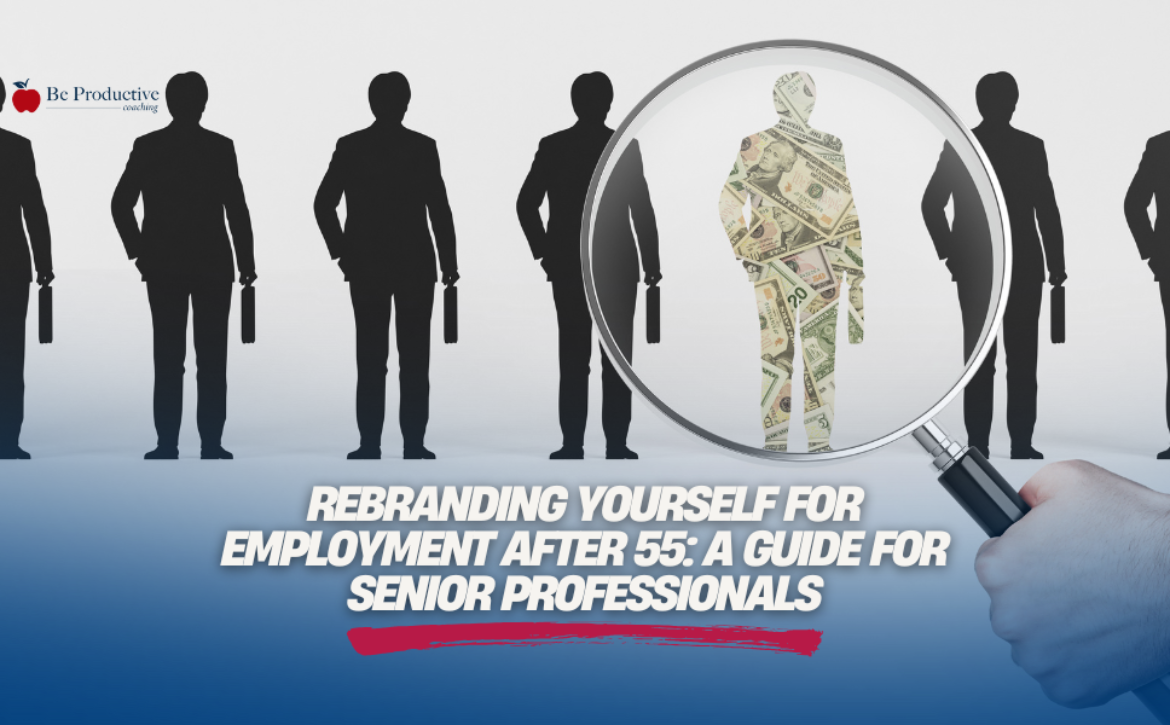
Rebranding Yourself for Employment After 55: A Guide for Senior Professionals

Rebranding Yourself for Employment After 55: A Guide for Senior Professionals

Rebranding Yourself for Employment After 55: A Guide for Senior Professionals

Recently, I’ve been contacted by several friends within my network who are over 55 and have spent years working for themselves. Many have been solopreneurs and entrepreneurs, successfully running their own businesses. However, with the current state of the economy and the need to be more strategic about retirement, they’ve decided that returning to traditional employment is the best move.

The challenge? Rebranding themselves as employees after years of being their own boss. When you’ve worn multiple hats and built something from the ground up, translating that into a clear and compelling job search strategy can feel overwhelming. If you’re facing a similar transition, this blog is for you.

The Challenge of Career Transition After Entrepreneurship

One of the biggest hurdles former entrepreneurs face is shifting their mindset. When you’ve managed every aspect of a business, it can be difficult to narrow your focus to a single job role within an organization. Most employers and hiring managers don’t have the time to get creative to figure out where you belong—you have to show them.

To successfully transition back into the workforce, you need to clarify your ideal next step and rebrand yourself for the job market. Here’s how:

Before jumping into job applications, take time to get clear on what you want. Ask yourself:

If you could have it all, what would the perfect next step be?

What would your focus be?

Where would you be working?

What type of environment and people do you want to work with?

What skills and strengths do you want to apply?

What impact do you want to make?

What sets you apart from your competitors who are applying for the same roles?

By answering these questions, you’ll gain clarity on the types of roles you should target.

 Step 2: Tailor Your Resume for the Corporate World

Many professionals over 55 struggle with outdated resume formats and broad job descriptions. If your resume doesn’t clearly align with the roles you want, hiring managers won’t take the time to connect the dots. Here’s what you need to do:

Use a traditional, ATS-friendly format. Creative or unconventional resumes often don’t make it past applicant tracking systems.

Highlight transferable skills. Showcase the strengths from your entrepreneurial background that apply directly to the roles you’re targeting.

Align your experience with job descriptions. Look at job postings for positions you’re interested in and ensure your resume speaks to those roles.

Make it easy to read. Most recruiters spend less than 10 seconds scanning a resume—clear, concise, and targeted content is key.

Step 3: Optimize Your LinkedIn Profile

Your LinkedIn profile is just as important as your resume. It needs to clearly brand you for your next step rather than leaving it up to interpretation. Ensure that:

✔️ Your headline reflects the role you’re seeking, not just your past titles.

✔️ Your summary tells a compelling story about your expertise and the value you bring.
✔️ Your experience section aligns with your resume and highlights key achievements.
✔️ You are engaging with industry-related content and networking within your target field.

Step 4: Make It Easy for Hiring Managers to See Your Fit

Most employers and hiring managers don’t have the time to get creative and figure out where you belong. You have to make it easy for them. A well-branded resume and LinkedIn profile ensure that your experience and skills are immediately clear and relevant to the job.

However, this transition isn’t just about updating your documents—it’s also about overcoming the mindset challenges that come with this life change.

Step 5: Prepare for the Mental Shift and Interview Success

Shifting from self-employment to corporate roles comes with a unique set of challenges—limiting beliefs, fear of rejection, and self-sabotage can creep in.

That’s why my Complete Career Transformation Program includes more than just a resume and LinkedIn profile update. It also provides:

✔️ Positive Intelligence Bootcamp – Helping you build mental resilience and overcome self-doubt.
✔️ Interview Preparation – Equipping you with the skills to confidently communicate your value.
✔️ Coaching Sessions – Helping you navigate challenges and create a strategic job search plan.

This program is designed to not only help with the branding but also the mindset you’ll need to successfully transition back into the workforce.

You Don’t Have to Do This Alone

Reentering the workforce after years of self-employment can be daunting, but with the right strategy and mindset, you can position yourself for success. If you’re ready to take control of your next career move, I’m here to help.

👉 Let’s work together to rebrand your experience, refine your strategy, and build the confidence you need to land your ideal role.

📩 Schedule a consultation today to discuss how my Complete Career Transformation Program can help you make this transition with clarity and confidence.

How to Make a Lasting Impression During the Hiring Process

How to Make a Lasting Impression During the Hiring Process

How to Make a Lasting Impression During the Hiring Process

As the new year 2025 approaches, many individuals begin to reflect on their career goals and consider their next steps. To support job seekers during this pivotal time, we want to offer valuable tips to help you stand out in the job interview process and secure your next opportunity.

The hiring process is often described as a competitive race, and in such an environment, standing out is paramount. As companies face ever-increasing competition for top talent, job seekers must immediately make a lasting impression. But how can you ensure you don’t blend into the sea of applicants?

Preparing for the Job Interview: Setting the Stage for Success

Preparation is the foundation of any successful interview. It’s the first opportunity to set the tone for the conversation, and it begins long before you even walk into the room (or log into the virtual meeting).

One of the most critical components of preparation is gaining a solid understanding of the company and its values. Companies want to know that you’ve done your homework, and a well-prepared candidate demonstrates that they are genuinely interested in the organization and the role.

Tailor Your Resume and Cover Letter

While your resume and cover letter might be the first things a hiring manager sees, how you tailor them for the specific job you’re applying for can be the difference between getting noticed or being overlooked. Make sure to:

  • Customize your resume to highlight the most relevant experience.
  • Write a cover letter that is specifically tailored to the company and role. Avoid using a generic template.

Prepare for Common Interview Questions

The more prepared you are to answer common interview questions, the more confident you’ll appear to the hiring manager. Practice answering questions such as:

  • “Tell me about yourself.”
  • “What are your strengths and weaknesses?”
  • “Why do you want to work here?”

Prepare not only the content of your answers but also your delivery. Practicing your responses in front of a mirror or with a friend can help you refine your message and avoid sounding too rehearsed.

Actionable Tip: Elevator Pitch Perfect your elevator pitch—a concise, compelling way to introduce yourself. This short introduction should describe who you are, what you do, and why you’re a perfect fit for the position.

Mastering Communication: Clear and Confident Interaction

In an interview, communication isn’t just about what you say but how you say it. The way you interact with the interviewer can leave a lasting impression.

Non-Verbal Communication

While your words are important, your body language speaks volumes. Non-verbal cues such as posture, facial expressions, and gestures communicate something to the interviewer, often more powerfully than you say.

  • Maintain Eye Contact: This conveys confidence and attentiveness. However, avoid staring, as it may make you seem uncomfortable.
  • Smile and Nod: A friendly demeanor can help build rapport with the interviewer. Smiling while speaking or listening also shows warmth and enthusiasm.

Posture Matters: Sit up straight, avoid crossing your arms, and avoid fidgeting. This communicates that you’re engaged and interested.

Active Listening

Active listening is key to ensuring that you respond thoughtfully. Instead of just preparing your following answer while the interviewer speaks, focus on what they are saying. This shows respect and gives you time to formulate a more thoughtful response.

  • Use Verbal Acknowledgments: Phrases like “I see” or “That makes sense” show you are engaged in the conversation.
  • Ask Clarifying Questions: If you don’t fully understand a question, don’t hesitate to ask for clarification. It demonstrates that you’re thoughtful and thorough.

Confident Speaking

How you speak plays a significant role in how your message is received. While being authentic is essential, speaking confidently can significantly impact your perception.

  • Speak Clearly and Concisely: Avoid rambling or going off-topic. Stick to the point while elaborating just enough to provide clarity and context.
  • Pace Yourself: Speaking too quickly can make you sound nervous or uncertain, and speaking too slowly can seem disinteresting. Find a comfortable rhythm.

Actionable Tip: Practice and Feedback Practicing out loud, whether in front of a mirror or with a trusted friend, can help you refine your answers and speaking style. Seek feedback on how you can improve your delivery and confidence.

Building Rapport: Creating a Personal Connection with the Interviewer

While technical skills and qualifications are paramount, building rapport can make you stand out as a memorable candidate. People hire people they like and connect with, so creating a personal bond can set you apart.

Find Common Ground

Look for shared interests or experiences that can help you build a connection. This could be as simple as discussing recent company initiatives or sharing insights about the industry. If you discover a mutual interest, you can gently guide the conversation in that direction—this helps humanize the interaction and make it more memorable.

Be Genuine

People can tell when someone is being inauthentic. Authenticity is key when building rapport. Don’t try to be someone you’re not. Let your personality shine through while maintaining professionalism.

Ask Thoughtful Questions

At the end of the interview, don’t hesitate to ask the interviewer questions that show a more profound interest in the role and company. A few examples include:

  • “What is the company culture like?”
  • “What are some of the team’s biggest challenges right now?”
  • “Can you describe the growth trajectory for someone in this role?”

Actionable Tip: Be an Active Participant Throughout the interview, maintain an active, engaged presence. Respond enthusiastically and with interest. This helps create rapport and sets a positive tone for the conversation.

Following Up: Reinforcing Your Interest and Enthusiasm

The interview doesn’t end when you leave the room—or click the “leave meeting” button. How you follow up can significantly impact whether or not you leave a lasting impression.

Send a Thank-You Note

A thank-you note is a simple yet powerful way to reiterate your interest in the role. Within 24 hours of the interview, send a personalized email thanking the interviewer for their time and expressing gratitude for the opportunity.

  • Personalize Your Message: Reference specific parts of the interview that you appreciated or stood out to you.
  • Reiterate Your Fit: Briefly emphasize your qualifications or enthusiasm for the role.

Actionable Tip: Timeliness is Key The sooner you send the thank-you note, the better. It reinforces that you’re eager, professional, and organized. Be sure to proofread the note before sending it to avoid any errors.

Special Offer: Start Your New Year Strong

Take advantage of our New Year offer! Get 25% off any of our packages until January 15th. Mention this blog when scheduling your free consultation or visit our website to purchase directly—all our packages are discounted by 25% until January 15th. We especially recommend our Unleash the Power Within package for 2025 at this once-in-a-lifetime 25% discount. Learn more here.

Make a Lasting Impression During Hiring Process: Let Be Productive Coaching Help You Stand Out

Unpacking Job Hate: Is It You, Them, or the System?

Unpacking Job Hate: Is It You, Them, or the System?

Unpacking Job Hate: Is It You, Them, or the System?

Job dissatisfaction has become alarmingly common, affecting professionals across industries and career stages. A recent Gallup survey revealed that nearly 60% of workers feel emotionally detached from their jobs, and 19% are downright miserable. Why is this the case? Why do so many people dislike their jobs, and how can they address this frustration? Are you part of this statistic?

Understanding the root of job dissatisfaction is key to finding solutions. The reasons often fall into three categories: internal factors (your mindset and expectations), workplace dynamics (your relationships and environment), and systemic issues (broader cultural and economic forces).

Why Do People Hate Their Jobs? Before exploring solutions, it’s essential to understand the factors that lead to widespread job dissatisfaction. Common reasons include:

  • Lack of Meaning or Purpose: Many employees feel their work needs to be more significant and connected to their values, leaving them unfulfilled. Without a sense of purpose, even high-paying roles can feel dissatisfying.
  • Toxic Work Environments: Workplace toxicity, including office politics, poor leadership, or lack of recognition, can lead to frustration and burnout.
  • Unrealistic Demands: The modern obsession with productivity often results in heavy workloads, long hours, and little room for balance, leaving workers drained and resentful.
  • Stagnation: Professionals often prefer to avoid their jobs when they feel stuck in a role without growth opportunities. A lack of challenges or skill-building prospects can lead to disengagement.
  • Economic Pressures: Low wages, job insecurity, or the constant need to “hustle” can create stress and dissatisfaction. For many, jobs feel more like a financial necessity than a fulfilling career path.

Recognizing these common issues is the first step in addressing job dissatisfaction. Let’s explore how internal, relational, and systemic factors contribute to these challenges.

The Internal Perspective – Is It You? Sometimes, dissatisfaction originates from within. Your mindset, values, and expectations play a significant role in shaping how you experience work.

Career misalignment is a leading internal cause. If your job doesn’t align with your passions or goals, it’s natural to feel frustrated. Additionally, unrealistic expectations—assuming every workday will be fulfilling—can amplify dissatisfaction when reality doesn’t meet these standards.

Burnout is another internal factor. Emotional exhaustion from prolonged stress can make even routine tasks feel insurmountable, causing negative feelings to snowball.

Workplace Dynamics – Is It Them? For many, dissatisfaction stems from workplace culture and relationships. No matter how meaningful the work is, a toxic environment can erode morale.

Poor leadership is one of the biggest culprits. A disengaged or micromanaging boss can create a frustrating atmosphere, while a lack of recognition or unclear communication can make employees feel undervalued. Similarly, unresolved conflict with colleagues can add to daily work stress.

  • Communicate openly: Have a candid conversation with your manager about expectations, growth opportunities, or concerns.
  • Learn conflict resolution skills: Approach workplace disagreements with a focus on finding solutions rather than assigning blame.
  • Evaluate the culture fit: If the organization’s values don’t align with your own, it might be time to consider a new role or workplace.
  • Invest in your mental fitness: Strengthen your ability to tackle workplace challenges with calm focus instead of stress or self-sabotage. Enroll in a 7-week Positive Intelligence (PQ) Bootcamp to master the PQ operating system, which enhances mental agility, reduces negative self-talk, and boosts problem-solving skills.

The Systemic Reality – Is It the System? In many cases, dissatisfaction is driven by forces beyond individual control. The broader system—marked by relentless productivity demands, stagnant wages, and a glorified “hustle” culture—often leaves employees feeling overworked and undervalued.

Societal expectations also play a role. The notion that success equals constant grind and sacrifice creates a work environment where balance and well-being are deprioritized. Economic pressures, such as the rising cost of living and job insecurity, exacerbate these challenges.

  • Adapt to systemic limitations: Look for companies offering flexible schedules, remote work options, or strong mental health initiatives.
  • Advocate for change: Join efforts to improve workplace policies, like pushing for better benefits, wellness programs, and psychological safety.
  • Explore alternatives: If the system feels unchangeable in your current role, consider pivoting to a more supportive industry or organization.

Transform Your Career: Take the First Step Toward a More Fulfilling Career Today!

Hating your job isn’t just frustrating—it can impact your mental health, relationships, and long-term career prospects. By examining whether the problem lies within you, your workplace, or the broader system, you can begin to take actionable steps toward change. Job satisfaction is possible with the right strategies and support.

At Be Productive Coaching, we specialize in guiding professionals through these challenges. Whether you need help realigning your goals, improving workplace dynamics, or considering a career shift, we support you. Contact us today to take the first step toward a more fulfilling professional life.

Don’t let job dissatisfaction follow you into 2025! Join our 7-week Positive Intelligence (PQ) Bootcamp starting on January 11th and receive 25% off when you register by December 23, 2024. Learn how to address workplace challenges with calm, focus, and mental clarity instead of frustration and self-sabotage. Take control of your career and start the new year with purpose and impact. Reach out to secure your spot today!

Surprising Daily Habits That Could Be Adding to Your Anxiety

Surprising Daily Habits That Could Be Adding to Your Anxiety

Surprising Daily Habits That Could Be Adding to Your Anxiety

In today’s fast-paced world, anxiety has become an everyday companion for many. While we’re aware of the significant stressors like work deadlines or financial worries, it’s easy to overlook the small, seemingly harmless habits that could add to our stress levels. Recognizing these hidden triggers is essential for building a balanced, calm lifestyle. Here, we’ll explore a few of these daily habits that might fuel your anxiety and share how some simple adjustments can make a big difference.

Disclaimer: This article discusses general, everyday anxiety that may come from typical life stressors. If you experience persistent, overwhelming, or medically diagnosed anxiety, please consider consulting a healthcare provider for appropriate guidance and support.

I know it’s tempting to reach for your phone first thing in the morning to scroll through social media or catch up on the news, especially if you are like me and use your phone as your alarm. But while it might feel like a gentle way to wake up, it can kickstart a cycle of stress. Studies show that exposure to social media early in the day can lead to comparison, information overload, and even “doom-scrolling”—a habit linked to increased anxiety.

Instead of starting with your phone, begin your day with a screen-free routine. A few minutes of stretching, deep breathing, or enjoying a quiet cup of coffee can help you set a calm, positive tone for the day.

Personally, I am thankful to have my two dogs, who are attention hounds in the morning. Although I walk to the bathroom to brush my teeth with my phone, my focus is on them and getting my teeth brushed. I also have a morning routine of listening to the daily readings in the Hallow App. So, although I am on my phone, I am being productive with my spiritual practice.

To-do lists are fantastic for staying organized, but there’s a fine line between planning and overwhelming yourself. When we overload our lists, we create pressure to achieve perfection, leading to stress when we inevitably fall short. This constant drive to cross off every task can fuel feelings of inadequacy and, yes, anxiety.

Instead, try limiting yourself to 3-5 critical tasks each day. This approach, known as “priority planning,” keeps you focused on what truly matters, reducing the pressure of an overloaded list and boosting both productivity and peace of mind.

My trick? I schedule everything on my calendar, and there’s only so much space, so I have no choice but to limit myself to 2 or 3 key tasks between client sessions. 

This is a hard one for me to include here because it is my ONLY guilty pleasure. However, I understand how, for some, this may be a stimulant that is not good for you. So, if you are one of those people, you should lay off the caffeine. I know it’s hard because caffeine is a go-to for many in our “always-on” culture, providing that quick boost to keep going. But caffeine stimulates the nervous system, raising heart rate and blood pressure, both of which mimic anxiety symptoms. For some, this can unintentionally amplify feelings of anxiety.

If that’s you, consider switching your second or third cup of coffee for herbal tea or water, especially in the afternoon. Green tea, with its mix of caffeine and the calming amino acid L-theanine, maybe a gentler alternative. Moderating caffeine intake can help maintain energy while keeping anxiety triggers in check.

Busy schedules make skipping meals or grabbing quick, sugary snacks easy. But erratic eating leads to blood sugar dips, making you feel irritable, anxious, and fatigued. Eating high-sugar foods also causes “sugar crashes” that exacerbate anxiety symptoms.

Prioritizing balanced meals with protein, healthy fats, and complex carbs can stabilize blood sugar and improve mood. Setting aside time to eat mindfully—even just 10 minutes—can keep your body and mind balanced. Minor adjustments like meal-prepping, carrying snacks, or ordering from a meal service (my productivity hack) can significantly impact your anxiety levels.

Before I go on, let me tell you about Jet Fuel Meals. My husband and I work from home, and earlier this year, we recognized that our schedules were not allowing meal prepping, so we decided to try out this meal delivery service after a neighbor raved to us about it. Let me just say it’s been four months, and we love it. It saved us time and money, and we no longer skip meals or snacks. Jet Fuel Meals is based in Florida, but you can locate a meal service near you if you are out of the state. 

With remote work and constant connectivity, many people need to be productive all day. But this “always-on” mentality often backfires, leading to mental fatigue, burnout, and increased anxiety. With breaks, our brains can experience much-needed rest, which makes handling stress easier.

Set a timer to take a 5-10 minute break each hour. Stretch, walk around the block, or practice mindfulness to recharge. These small mental breaks can reduce stress, allowing you to return to tasks more focused and refreshed. I love playing with my dogs during my breaks and taking a short walk during my lunch break.

Ignoring Sleep Needs: How Sleep Deprivation Impacts Anxiety

Now, this is a massive boundary for me. Sleep and mental health go hand in hand, yet many of us sacrifice sleep for extra work, screen time, or late-night distractions. Poor sleep lowers resilience, worsens mood, and impairs focus—all of which can heighten anxiety.

Prioritizing sleep is one of the simplest ways to reduce anxiety. Aim for 7-9 hours each night and consider a relaxing bedtime routine. I love my bedtime routine! Avoid screens at least an hour before bed to reduce blue light exposure (I can be better at this), which disrupts melatonin production and can impact sleep quality.

Here is my routine:

I start with a hot shower, go through my facial routine, and brush my teeth. I take one melatonin, put a moisturizer on my feet and a little balm on my lower back, and say my nighttime prayers. I then turn on my white noise machine, put on my silk satin bonnet if my hair is styled, and lastly, put on my Tempur-Pedic Sleep Mask and go to sleep. I love my routine! 

Awareness as Your First Step Toward Change

Being aware of these hidden anxiety triggers is your first step to a healthier, more balanced life. With minor adjustments to your habits, you can make space for calm, focus, and mental clarity in your day-to-day routine. These small changes add up, helping you feel more in control and less anxious.

My last go-to is Ashwagandha.. I am not a doctor, and I am not prescribing this to you, but this natural supplement has been life-changing for my husband and me. It helps balance energy levels, stress relief, and mood. Read about it and ask your healthcare professional if it’s okay for you to take it. 

Start Managing Your Anxiety with Be Productive Coaching

Ready to take the next step toward a balanced, fulfilling life? At Be Productive Coaching, we offer personalized guidance to help you recognize and reduce anxiety triggers, build healthier daily habits, and regain control over your well-being. Through compassionate, expert coaching, we’ll help you develop strategies that fit your unique lifestyle and goals.

Don’t let anxiety dictate your days—reach out today and start creating a foundation for lasting calm and resilience.

Career inspiration from movie characters: Leadership lessons from cinematic heroes.

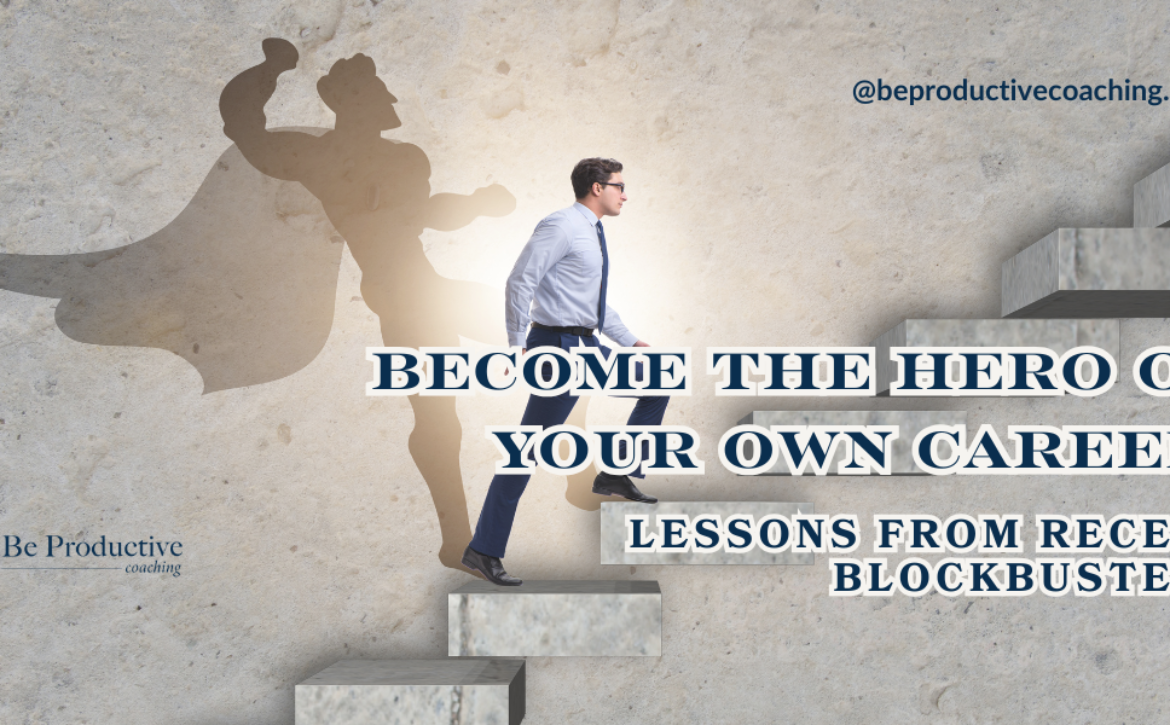
Become the Hero of Your Own Career: Lessons from Recent Blockbusters

Become the Hero of Your Own Career: Lessons from Recent Blockbusters

Have you ever watched a movie and thought, “I wish I had that character’s confidence”? You’re not alone. These movie magic moments might be more valuable to your career than you’d think. Today’s evolving workplace is about resilience, innovation, and adaptation—the qualities we admire in our favorite cinematic heroes.

Who has yet to want Tony Stark’s vision or Wonder Woman’s presence? Sure, movies are fiction, but these characters’ qualities are worth emulating in real life. Studies show we’re 65% more likely to retain career lessons when they come wrapped in a story. Think about it: are you more likely to remember a PowerPoint on leadership principles or a gripping story where a character conquers complex challenges?

Movies hit a sweet spot by combining visuals with emotions. When engrossed in a character’s journey, you experience their decisions and learn from the outcome. This connection lasts longer and resonates more than traditional learning methods.

Take Miranda Priestly in The Devil Wears Prada—watching her navigate high-stakes workplace dynamics teaches us as much about professional boundaries and expectations as any management seminar could. Movies help us internalize these lessons in a way that sticks.

Have you ever wondered why certain movie characters resonate so deeply with you? It might be because they represent a version of your professional archetype, tapping into qualities you aspire to embody or already possess. These archetypes reveal your strengths, values, and even areas for growth.

As a child, I was always drawn to Wonder Woman. There was something magnetic about her courage, her compassion, and her commitment to justice that inspired me. And as I reflect on my own journey today, I realize that my purpose, values, and the work I do through Be Productive Coaching align strongly with Wonder Woman’s archetype.

Wonder Woman exemplifies the Purpose-Driven Leader—a leader who serves with compassion and whose decisions are guided by deeply held values. She shows us that leadership isn’t about personal glory; it’s about using our strengths to elevate and protect others. Here are some of the core qualities Wonder Woman brings to her role that align with this archetype:

Empathy and Strength: She blends courage and compassion, a hallmark of leaders who inspire loyalty and trust. True strength comes from balancing power with empathy, showing us that connection with others drives meaningful leadership.

Courage in Adversity: Wonder Woman faces challenges with bravery, reminding us that resilience is essential in leadership. She teaches us to challenge norms and make courageous choices even when the path isn’t easy.

Empowerment of Others: Finally, her purpose-driven approach isn’t only about leading from the front. Wonder Woman inspires others to see their potential, empowering them to stand up for their beliefs and goals. Her leadership is unifying, and she shows us that success lies in fostering a supportive, empowered community.

As I guide my clients, Wonder Woman’s influence reminds me that true leadership means staying true to our values, inspiring collective growth, and making choices that impact people’s lives positively. Her character is a great reminder that when we lead with purpose, we create lasting change that goes beyond individual success.

The Innovation Pioneer—think Tony Stark. Pioneers see potential, whereas others see dead ends. These professionals don’t just dream; they make things happen, turning ideas into reality. Stark’s evolution from weapons designer to clean-energy innovator shows that true impact doesn’t come just from fresh ideas but from the courage to reinvent.

The Team Catalyst—like Black Panther’s T’Challa, they know leadership isn’t about power but about empowering others. Their talent lies in uniting diverse perspectives, showing us that success depends on team strength rather than solo brilliance.

The Strategic Adapter—Hermione Granger, for instance. These pros thrive on solving complex puzzles and are incredibly resilient under pressure. Her adaptability shows us that quick thinking and resourcefulness are often more valuable than pure talent.

In Ratatouille, a rat becomes Paris’s top chef. This isn’t just a cute story; it’s a lesson in adaptive leadership. Remy doesn’t try to be someone he’s not—he finds unique ways to demonstrate his value. Adaptive leadership is about applying your strengths creatively, not conforming to the norm.

Transformational moments in our careers don’t always arrive with fanfare. In The Intern, Robert De Niro’s character bridges generational gaps with his perspective, reminding us that growth can come from blending wisdom with openness to new ideas.

Blockbusters are surprisingly insightful about today’s work environment. The Social Network captures the intense pace and creative demands of startup culture, while The Intern delves into the nuances of a multi-generational workplace. These films highlight that navigating the modern workplace isn’t just about using tech effectively—it’s about understanding how it changes human dynamics. They also address work-life integration, challenging us to find meaning beyond success and helping us define healthy boundaries.

Ready to be the hero of your career? Start by defining your character arc. Where are you now? Where do you want to go? Identify obstacles, and remember: though you may not save the world, you strive to create a life and career that resonate with your values and goals.

Your story needs a supporting cast, too. Every hero has a trusted mentor. Who in your life can guide you, just as Nick Fury does for the Avengers? Seek out mentors who can offer perspective and build a support system.

Finally, document your journey. Every lesson learned and success achieved are chapters in your career story—one that you’ll look back on with pride.

The Future Workplace: Tomorrow’s Heroes in Today’s Movies

Today’s blockbuster heroes give us a glimpse into the future of work. They’re tech-savvy, global-minded, and human-centered. Success in the future will mean balancing digital expertise with emotional intelligence, just as these heroes do. They show us that career sustainability isn’t about resisting change but embracing it while staying true to our values.

Uncover Your Career Hero with Be Productive Coaching

At Be Productive Coaching, we believe every professional can be the hero of their career. Like Q for James Bond, we provide the tools and insights to turn movie-inspired lessons into real-world success. 

Want to start your own blockbuster journey? Contact us to learn how we can help you craft the next chapter of your professional story.

Networking Made Easy: How to Connect with Confidence and Purpose

Networking Made Easy: How to Connect with Confidence and Purpose

Networking Made Easy: How to Connect with Confidence and Purpose

Have you ever felt like a fish out of water at a networking event? You’re not alone. For many professionals, the mere thought of networking can trigger a cold sweat. But what if I told you that networking could be painless, enjoyable, and incredibly rewarding? Welcome to your guide on “Networking Made Easy: How to Connect with Confidence and Purpose.”

Networking isn’t about collecting business cards like Pokémon. It’s about cultivating meaningful professional relationships that can take your career to new heights. But before you sink in, let’s lay the groundwork:

  • Set Clear Goals: What do you want to achieve? Who do you want to meet? Having a roadmap turns networking from a vague concept into a purposeful mission.
  • Embrace a Growth Mindset: Every interaction is a chance to learn. That awkward silence? It’s just an opportunity in disguise.
  • Open Your Eyes: Networking opportunities are everywhere – from your morning coffee run to your weekend spin class. Stay alert!

I didn’t see myself as a natural networker. In fact, I started my career in sales in 2002 at the Sonesta Beach Resort in Key Biscayne. To be honest, I didn’t see myself as a salesperson either! The only reason I took the position was that the resort’s General Manager recommended it. At the time, I was bored with operations as the Assistant Front Office Manager and wanted to try something new. When I shared this with the GM, he suggested sales. I was surprised by his recommendation, but I trusted his intuition. He believed in me so much that he opened up an opportunity for me as the Small Groups and Corporate Travel Sales Manager. I got the job after applying and interviewing with the Director of Sales and VP of Sales.

A year later, I found myself at my first sales retreat. I’ll never forget it because it was also my first time presenting in front of an audience. Our VP of Sales assigned each of us a topic based on a skill he thought we had perfected, and much to my surprise, he gave me “Networking.” I was caught off guard because, like sales, I hadn’t realized networking was something I was good at. However, after reflecting, I began to see how my networking skills had been naturally developing. I crafted a presentation on networking for my colleagues, which received excellent feedback, and I was proud of how far I’d come.

I realized networking was all about mindset, just like taking the leap into sales. To apply for the sales position, I had to let go of my judgment about what sales was. Likewise, for networking, I had to stop thinking of it as something scary. The fear dissolved once I reframed my approach and realized that everyone was there with a similar goal – to network and build relationships that lead to business.

Feeling jittery about putting yourself out there? Try these confidence boosters:

  • Craft Your Elevator Pitch: Think of it as your professional theme song. It should be short, catchy, and uniquely you.
  • Body Language Hacks: Stand tall, smile genuinely, and offer a firm handshake. This is the only time I will tell you to fake it ’til you make it – your body can trick your brain into feeling more confident.
  • Introvert’s Toolkit: If large crowds make you sweat, seek one-on-one conversations. Quality trumps quantity every time.

In the age of social media, it’s easy to equate success with a high follower count. But networking is all about quality connections. Here’s how to make them:

  • Be Genuinely Curious: Ask thoughtful questions. People love talking about themselves – give them the spotlight.
  • Listen Like Your Career Depends on It: Because it might. Active listening is a superpower in networking.
  • Give Before You Take: Offer value without expecting immediate returns. It’s the long game that pays off.

Now that you’re ready to mingle, let’s polish those skills:

  • Icebreakers That Work: Forget “Nice weather, huh?” Try “What’s the most exciting project you’re working on now?”
  • Navigate Events Like a Pro: Set goals for meaningful conversations, not just hands shaken. Quality over quantity, remember?
  • Follow-Up Finesse: Send a personalized email within 48 hours. This is the most critical step! Reference your conversation and suggest a concrete next step. Remember that most people will not follow up, so this is an excellent way to set yourself apart.

Welcome to Networking 2.0:

  • LinkedIn Makeover: Your profile is your digital handshake. Make it firm and memorable. If you’re unsure how to do this, check out our other blogs, which offer great branding tips.
  • Social Media Strategy: Each platform is a networking goldmine. Choose your playground: Twitter chats, Instagram stories, Facebook groups. Personally, I stick to LinkedIn.
  • Virtual Networking Mastery: With remote work on the rise, perfect your “virtual handshake” and Zoom etiquette. If you’re not sure how to do it, let’s chat!

Like any skill, networking gets better with practice and reflection:

  • Set Networking Metrics: Track new connections, follow-up rates, and opportunities generated. What is measured is managed.
  • Quality Check: Regularly assess your network. Are these connections aligned with your goals?
  • Continuous Improvement: Seek feedback, reflect on interactions, and stay updated on networking trends.

The ultimate goal? Turning the connections into career opportunities.

  • Keep Contacts Warm: Regular check-ins and updates keep you at the top of their mind. Make sure to keep these meaningful.
  • Be a Giver. The more you help others, the more likely they are to think of you when opportunities arise.
  • Clear Communication: When seeking opportunities, be specific about what you want.

Networking isn’t about being the loudest in the room or having the most LinkedIn connections. It’s about building genuine relationships, adding value to others’ lives, and strategically growing your professional circle. With these tools, you can transform networking from a necessary evil into your secret career superpower.

Remember, every great connection starts with a single “Hello.” So, take a deep breath, put on your most approachable smile, and get out there. Your next game-changing opportunity might be just a handshake away.

Ready to improve your networking skills? At Be Productive Coaching, we offer personalized strategies to supercharge your professional connections. Contact us today and watch your network and career soar.

Why Is It Difficult to Articulate Your Accomplishments and Contributions—and How to Overcome It

Why Is It Difficult to Articulate Your Accomplishments and Contributions—and How to Overcome It

Why Is It Difficult to Articulate Your Accomplishments and Contributions—and How to Overcome It

As a Career Strategist and Coach, I’ve had the privilege of working with countless clients, and one thing that consistently stands out is the struggle to articulate their own accomplishments. I get it; it’s tough! This blog aims to shed light on why this happens and to share some practical tips to help you overcome these hurdles.

Many of us need help communicating our professional achievements effectively, which can stall career growth and impact job interviews. We often feel tongue-tied when someone asks us to share our contributions. But don’t worry—by practicing clear communication and honing in on specific examples, you can confidently present your achievements and boost your career prospects.

Psychological Barriers to Self-Promotion

In my experience, the first step in overcoming the difficulty of articulating accomplishments is recognizing the psychological factors at play. 

Let’s explore some common mental roadblocks that can hold us back:

  • Imposter Syndrome and Self-Doubt: Imposter syndrome is all too familiar for many professionals. You might find yourself feeling like a fraud, attributing your successes to luck instead of your hard work and talent. This self-doubt can undermine your confidence, making it tough to recognize and share your strengths.
  • Fear of Being Perceived as Boastful: Many people hesitate to highlight their achievements because they worry about coming off as arrogant. This fear often stems from cultural norms discouraging self-promotion or past experiences where boasting wasn’t well-received. Balancing humility with self-advocacy can be tricky!
  • Difficulty in Recognizing Personal Achievements: Sometimes, the challenge is simply identifying what we’ve accomplished. It’s easy to get caught up in what we need to improve rather than celebrating our successes. Plus, comparing ourselves to others can leave us feeling inadequate, making it harder to appreciate our own incremental wins.
  • Cultural and Social Influences: Our upbringing and social environments greatly influence how we talk about our achievements. In some cultures, individual recognition is less valued than group accomplishments, while gender norms can also influence self-promotion practices. Your workplace culture can encourage open dialogue about personal contributions or stifle it altogether.

Cognitive Challenges in Articulating Accomplishments

Beyond psychological barriers, several cognitive challenges can make it tough to communicate our achievements effectively:

  • Lack of Self-Awareness and Reflection: Many professionals don’t take the time to reflect on their accomplishments regularly. It’s easy to overlook significant contributions when we’re caught up in the hustle and bustle of daily tasks. A lack of self-awareness can lead us to underestimate our impact.
  • Difficulty in Quantifying Intangible Contributions: Not every accomplishment has numbers attached, which can make it challenging to articulate. Soft skills like leadership and teamwork are crucial but tough to quantify. The long-term impacts of our work might not be immediately visible, leaving us struggling to express their value.
  • Struggle with Identifying Transferable Skills: It can be hard to see how our skills apply in different contexts, making conveying our value in new opportunities difficult. Identifying these transferable skills can help ease your transition into new roles.
  • Overwhelm from Information Overload: In today’s fast-paced work environment, it’s easy to lose track of our individual achievements. The sheer volume of tasks can make prioritizing and remembering what we’ve accomplished challenging. Plus, with so much going on, we often don’t take the time to reflect on our successes.

Communication Hurdles

Even when we recognize our achievements, communicating them can be another challenge:

  • Lack of Practice in Professional Communication: Many of us don’t practice articulating our accomplishments regularly. This lack of practice can lead to stumbling over our words or underselling ourselves when the moment arises. Remember, effective communication is a skill that needs refinement!
  • Difficulty in Crafting Compelling Narratives: Telling a captivating story about your achievements is essential, but it can be challenging. It requires selecting the right details and presenting them in an engaging way. Striking the balance between providing context and highlighting results can be difficult.
  • Balancing Modesty and Self-Promotion: Finding the right tone when discussing your achievements is a delicate art. Overdoing modesty can lead to underselling yourself, while aggressive self-promotion might turn people off. The ideal approach varies based on the audience and context.

Strategies for Overcoming Articulation Difficulties

Now that we’ve explored the challenges let’s dive into some strategies to help you overcome them:

  • Developing a Growth Mindset: Embrace the idea that your ability to articulate your achievements can improve. See self-promotion challenges as opportunities for growth and cultivate curiosity about your own development.
  • Regular Self-Reflection and Achievement Tracking: Start an “achievement journal” to regularly document your successes, both big and small. Set aside time for self-assessment to reflect on your contributions.
  • Practicing the STAR Method for Structured Responses: The STAR method (Situation, Task, Action, Result) can help you articulate your accomplishments clearly. Describe the context, your responsibilities, the actions you took, and the positive outcomes.
  • Seeking Feedback and External Perspectives: Don’t hesitate to ask colleagues and supervisors for feedback on your contributions. Consider working with a career coach to help identify and articulate your unique value proposition.
  • Quantifying Achievements: Whenever possible, use metrics to back up your accomplishments. Consider how your contributions have impacted company goals and use concrete numbers to make your achievements tangible.

Techniques for Effective Self-Promotion

With strategies in place, let’s explore specific techniques for showcasing your value:

  • Crafting a Compelling Personal Brand: Develop a clear message about your professional identity and strengths. Create a personal mission statement encapsulating your value, and make sure your online presence aligns with your brand.
  • Developing an Elevator Pitch: Create a concise summary of your professional value and key achievements. Practice delivering it naturally in various contexts, tailoring it to different audiences.
  • Storytelling Techniques for Memorable Communication: Use storytelling to frame your accomplishments. Incorporate vivid details and emotions to engage your listeners, and practice concise storytelling to keep their interest.
  • Leveraging Social Proof: Collect positive feedback from colleagues, clients, and supervisors. Use quotes or examples of praise in your professional communications, and consider creating a “brag folder” to showcase tangible evidence of your accomplishments.

Building Confidence in Articulating Accomplishments

Confidence is critical to effective self-promotion. Here’s how to boost yours:

  • Overcoming Imposter Syndrome: Recognize that many successful individuals struggle with imposter syndrome. Keep a record of your achievements and seek support from mentors or trusted colleagues when you’re feeling uncertain.
  • Reframing Self-Promotion: View articulating your achievements as a way to inform others about how you can contribute. Focus on the value you provide to your team and organization rather than just your personal gain.
  • Practicing Positive Self-Talk: Develop a list of positive affirmations related to your strengths and achievements. Challenge negative self-talk when it arises, and practice affirmations regularly, especially before high-stakes situations.
  • Gradual Exposure to Self-Promotion: Start small by sharing your accomplishments with friends or trusted colleagues. Gradually increase the stakes until you’re comfortable discussing your achievements in higher-pressure situations.

Don’t Let Your Achievements Go Unnoticed—Reach Out Today!

Articulating your accomplishments and contributions is crucial in today’s competitive landscape. While it can be daunting, remember that it’s a skill you can develop with practice and the right strategies. Effective self-promotion is about clearly communicating your value and potential to contribute.

As you embark on this journey of self-discovery and improved communication, know you’re not alone. At  Be Productive Coaching, we’re here to help you unlock your full potential. If you’re ready to take your career to the next level by mastering articulating your value, contact us today for personalized guidance and support.

From Nervous to Nailed It: Answer Common Interview Questions with Confidence

From Nervous to Nailed It: Answer Common Interview Questions with Confidence

From Nervous to Nailed It: Answer Common Interview Questions with Confidence

You’ve secured an interview for your dream job, but the face-to-face meeting can be daunting, often turning excitement into anxiety. However, with the proper preparation and mindset, you can transform this experience into an opportunity for genuine confidence. Techniques such as researching the company, practicing self-talk, and visualizing success can help alleviate nerves and enhance your performance, as detailed on USA.gov. Embrace the challenge and remember that feeling anxious is normal and can indicate your enthusiasm for the role.

Understanding Interview Anxiety

Before exploring strategies for overcoming interview anxiety, we must understand what we’re against. Interview nervousness is a common phenomenon that affects job seekers across industries and experience levels. It’s not just about feeling uneasy; for many, it’s a significant hurdle that can severely impact their performance.

Common causes of interview anxiety include:

  • Fear of the unknown
  • Pressure to perform
  • Past negative experiences
  • Imposter syndrome
  • High stakes (especially when it’s a dream job)

These factors can trigger a range of physiological and psychological responses. Your heart rate increases, your palms become sweaty, and you might experience a dry mouth or shaky voice. Cognitively, anxiety can cloud your thinking, making it difficult to recall important information or articulate your thoughts clearly.

The impact on your interview performance can be substantial. Anxiety might cause you to:

  • Ramble or give unfocused answers
  • Forget key accomplishments or skills
  • Appear disinterested or lacking in confidence
  • Misinterpret questions or miss important cues

Understanding these effects is the first step in overcoming them. Feeling nervous is natural – it shows you care about the outcome. The key is learning to channel that energy positively.

Pre-Interview Preparation Strategies

The foundation of a confident interview lies in thorough preparation. This stage is where you begin to transform anxiety into assurance. Let’s break down the critical elements of adequate pre-interview preparation:

Research the Company and Position

Dive deep into the company’s website, recent news, and social media presence. Understanding the company’s mission, values, and recent achievements allows you to align your responses with their culture and goals. For the position, analyze the job description thoroughly. Identify the essential skills and experiences they seek, and prepare examples demonstrating your fit.

Anticipate Common Interview Questions

While you can’t predict every question, many interviews follow similar patterns. Prepare thoughtful responses to classics like:

  • “Tell me about yourself.” (This one is probably the most important as it sets the tone.)
  • “Why do you want to work here?”
  • “What are your greatest strengths and weaknesses?”
  • “Where do you see yourself in five years?”

Master the STAR Method for Behavioral Questions

The STAR method (Situation, Task, Action, Result) is invaluable for structuring responses to behavioral questions. These questions typically start with phrases like “Tell me about a time when…” or “Give an example of…” Practice applying this method to various scenarios from your professional experience.

Conduct Mock Interviews

Enlist a friend, family member, or mentor to conduct practice interviews to help you get comfortable with the interview format and provide feedback on your responses and body language. Consider recording these sessions to self-evaluate your performance.

Prepare Questions for the Interviewer

Thoughtful questions demonstrate your genuine interest in the role and company. They also help you gather vital information to assess if the position is correct for you. Prepare at least 3-5 questions that show you’ve done your homework and are thinking critically about the role.

Mastering Common Interview Questions

Now that we’ve laid the groundwork let’s explore strategies for answering some of the most common interview questions with confidence and clarity.

“Tell me about yourself.”

This open-ended question often serves as an icebreaker but can set the tone for the interview. Your response should be a concise, professional summary, not a personal biography. Structure your answer as follows:

  • Start with your current role and a key accomplishment.
  • Briefly touch on your professional journey and how it led you here.
  • Conclude with why you’re excited about this opportunity.

Example: “I’m a marketing manager at XYZ Corp, where I’ve led campaigns that increased our digital engagement by 40% over the past year. My background in data analytics, which I developed at ABC Inc., has been crucial in driving these results. I’m excited about the opportunity to bring this blend of creative and analytical skills to your team, especially given your focus on data-driven marketing strategies.”

You can refer to this newsletter we wrote on LinkedIn for more details on how to answer this question and subscribe to our newsletter for more. 

“What are your strengths and weaknesses?”

For strengths, choose attributes that align with the job requirements and support them with concrete examples. When discussing weaknesses, show self-awareness and a commitment to improvement.

Strength example: “One of my key strengths is my ability to collaborate across departments. In my current role, I initiated a cross-functional project that streamlined our product development process, reducing time-to-market by 20%.”

Weakness example: “I’ve sometimes struggled with perfectionism, which could lead to unnecessary delays. I’ve addressed this by implementing personal deadlines for each project stage and seeking feedback earlier.”

“Why do you want to work here?”

This question tests your knowledge of the company and your alignment with its values and goals. Your answer should demonstrate that you’ve researched and thoughtfully considered how you can contribute.

Example: “I’m impressed by your company’s commitment to sustainability, particularly your recent initiative to reduce carbon emissions in your supply chain. My experience in green logistics aligns perfectly with this goal, and I’m excited about the opportunity to contribute to such meaningful work.”

“Where do you see yourself in five years?”

Your response should show ambition while aligning with the company’s potential growth trajectory. Be honest but strategic.

Example: “In five years, I aim to deepen my expertise in AI-driven marketing strategies and lead a team implementing these cutting-edge approaches. I’m particularly drawn to your company’s focus on innovation and see it as an ideal environment for professional growth.”

Handling Unexpected or Challenging Questions

Sometimes, interviewers throw curveballs to assess your ability to think on your feet. When faced with an unexpected question:

  • Take a moment to gather your thoughts.
  • If needed, ask for clarification.
  • Structure your response logically, even if you’re unsure.
  • Be honest if you don’t know something, but express eagerness to learn.

Nonverbal Communication and Body Language

While your words carry weight, your nonverbal cues speak volumes. Mastering the art of body language can significantly boost your perceived confidence and rapport with the interviewer.

The Importance of First Impressions

Research shows that interviewers often form initial impressions within the first few seconds of meeting a candidate. Make those seconds count:

  • Arrive early to compose yourself.
  • Enter with a confident posture – shoulders back, head high.
  • Offer a firm handshake and a genuine smile.
  • Make eye contact as you introduce yourself.

Maintaining Eye Contact and Positive Facial Expressions

Throughout the interview:

  • Maintain natural, comfortable eye contact as it conveys confidence and engagement.
  • Smile genuinely when appropriate. It helps create a positive atmosphere.
  • Use facial expressions that match the tone of your words to appear authentic and enthusiastic.

Proper Posture and Hand Gestures

  • Sit up straight, leaning slightly forward to show interest.
  • Keep your hands visible and use natural, controlled gestures to emphasize points.
  • Avoid fidgeting, crossing your arms, or other closed-off postures.

Mirroring and Building Rapport

Subtly mirroring the interviewer’s tone and body language can help establish a subconscious connection. Be careful not to overdo it – the goal is to create harmony, not to mimic.

Building Confidence Through Practice and Mindset

Confidence isn’t just about what you know; it’s about how you feel. Developing a confident mindset is crucial for interview success.

Visualization Techniques

Spend time visualizing a successful interview. Imagine answering questions confidently, building rapport with the interviewer, and leaving with a sense of accomplishment. This mental rehearsal can significantly boost your actual performance. 

Positive Self-Talk and Affirmations

Replace negative thoughts with positive affirmations:

  • Instead of “I’m not qualified enough,” think, “I have unique skills that add value.”
  • Replace “I’ll probably mess up” with “I’m well-prepared and ready to showcase my abilities.”

Power Posing and Confidence-Boosting Exercises

Research suggests that adopting “power poses” (expansive, open postures) before high-stress situations can increase feelings of confidence. Try standing with your hands on your hips, feet apart, for two minutes before your interview.

Reframing Nervousness as Excitement

Anxiety and excitement are physiologically similar. Try reframing your nervousness as positive anticipation. Tell yourself, “I’m excited about this opportunity,” rather than “I’m nervous about this interview.”

Manage Anxiety During the Interview

Being prepared and practicing before the interview should calm your nerves and anxiety but if after reframing your nervousness as positive anticipation you feel anxiety creeping in during the interview then you may want to practice one of these Positive Intelligence reps (PQ reps.) PQ reps are like gym reps for your brain and can effectively keep your focus and calm your nerves. 

Here are a few different exercises you can try. Be sure to do them as you listen.

  1. Take three deep breaths and rub two finger tips together gently but hard enough that you feel all of the ridges of your fingers. Focus on that sensation as you listen.
  2. Take three deep breaths and wiggle your toes and focus on the movement as you listen. Try counting your toes from right to left or left to right. 
  3. Take three deep breaths and gently focus on the interviewer’s facial expressions or pick one feature to stare at while you are listening. The key here is to keep focus, allowing your thoughts to pass by without judgment.

It’s essential to practice these exercises daily to become familiar with them before utilizing them during an interview. This way, you will be better prepared to manage your anxiety and stay focused on the present moment. To learn more about Positive Intelligence and this technique, consider taking our Positive Intelligence Bootcamp

Adapting to Different Interview Formats

It helps prepare for various interview formats in today’s job market. Each type requires a slightly different approach:

One-on-One Interviews

  • Focus on building a personal connection with the interviewer.
  • Use their name occasionally and pick up on any personal cues they offer.

Panel Interviews

Make eye contact with each panel member, not just the person asking the question.

Address your answers primarily to the questioner, but engage others with brief eye contact.

Video and Phone Interviews

For video interviews:

  • Ensure your background is professional and well-lit.
  • Look directly into the camera to simulate eye contact.
  • Test your technology beforehand to avoid glitches.

For phone interviews:

  • Stand up and smile – it affects the tone of your voice positively.
  • Keep your resume and notes handy for easy reference.

Assessment Centers and Group Interviews

  • Show leadership without dominating.
  • Demonstrate teamwork by actively listening and building on others’ ideas.
  • Stay focused on the task at hand while showcasing your interpersonal skills.

Post-Interview Success Strategies

Your performance doesn’t end when you leave the interview room. Follow-up actions can reinforce a positive impression:

Effective Follow-Up Techniques

  • Send a thank-you email within 24 hours of the interview.
  • Reiterate your interest in the position and briefly remind them of your key qualifications.
  • If you discussed sending them any additional information or documents, provide them promptly.

Thank You Notes and Emails

  • Personalize your message by referencing specific points from the interview.
  • Keep it concise, professional, and error-free.
  • Use this opportunity to address any points you could have expanded on during the interview.

Handling Job Offers and Negotiations

If you receive an offer:

  • Express enthusiasm and gratitude.
  • Ask for time to consider the offer if needed.
  • If negotiating, be honest and confident about what your “must haves” are and focus on the value you bring to the company rather than personal needs. Be ready to meet in the middle. 

Learning from Rejections

If you don’t get the job:

  • Ask for feedback on your interview performance.
  • Reflect on what you could improve for next time.
  • Keep the door open for future opportunities by maintaining a professional attitude.

Elevate Your Career: Interview Coaching at Be Productive

The journey from nervous interviewee to confident candidate involves preparation, practice, and mindset. By researching the company, anticipating common questions, mastering nonverbal communication, and using confidence-boosting techniques, you can transform your interview experience. Each interview is an opportunity for personal growth and professional development. Applying these strategies will turn your nervousness into genuine confidence, allowing you to showcase your valuable skills and experiences.

At Be Productive Coaching, we understand the challenges professionals face when preparing for job interviews, and we’re here to help you unlock your full potential. Our personalized coaching sessions transform your interview skills, equipping you with the confidence and strategies you need to excel. Whether you aim to land your dream job or advance your career, we’ll refine your communication and highlight your strengths. 

Ready to take the next step? Book a free consultation with us today and start your journey to success!

Vimari Roman, Executive Coach

Tips for your career’s next step!

Career Strategist & Coach

I help high-performing professionals – like you – transition into exciting jobs with higher earning potential and career satisfaction.

Tips to prepare for your next career transition! 

Whether you want to switch industries, climb the corporate ladder, or start your own business, we have valuable advice to help you succeed.

1. Define your goals: Before embarking on a career transition, it’s essential to clearly understand what you want to achieve. Ask yourself: What kind of work do I enjoy? What are my strengths and weaknesses? What are my long-term career aspirations? Once you have a solid understanding of your goals, you can build an action plan.

2. Assess your skills: Take inventory of your existing skills and identify any gaps that need to be filled. Acquiring new knowledge and skills can be achieved through various means, such as enrolling in courses, participating in workshops, or seeking mentorship opportunities. The more you can enhance your skill set, the better positioned you will be for your next career move.

3. Network: Building relationships with people in your desired industry can be incredibly valuable. Broadening your professional circle can enhance your career transition prospects. You can consider participating in industry events, enrolling in professional associations, and contacting relevant contacts on LinkedIn to expand your network. This will help you learn about job opportunities and gain insider knowledge about the industry you want to enter.

4. Update your resume: Your resume is your personal marketing tool, so make sure it’s up-to-date and tailored to your new career goals. Highlight the skills and experiences that are most relevant to your new career path.

5. Practice interviewing: Interviews can be nerve-wracking, so practice makes perfect. Prepare for potential job interviews by researching frequently asked questions and rehearsing your answers with a trusted confidant, such as a friend or family member. The more prepared you are, the more confident you will be in the actual interview.

6. Stay positive: Career transitions can be challenging, but staying positive and persistent is essential. Don’t be discouraged by setbacks or rejections. Rather than being disheartened by setbacks, utilize them as opportunities for growth and progress. Maintain your determination and continue making efforts towards accomplishing your objectives.

We hope these tips help you prepare for your next career transition. Remember that anything can be achieved through an appropriate mental attitude and adequate groundwork.

Tips to Avoiding Stress & Burnout.

Stress and burnout are common issues faced by many people in today’s fast-paced and demanding world. Taking care of yourself is crucial to avoid these problems and maintain a healthy work-life balance. Here are some valuable tips to help you prevent stress and burnout:

1. Prioritize self-care: Make sure to take time for yourself every day to relax and recharge. Whether going for a walk, taking a yoga class, or reading a book, prioritize what works for you.

2. Set boundaries: Learn to say no and set boundaries with your work and personal commitments. You can avoid overloading yourself with too many tasks and schedule time for rest and relaxation.

3. Practice mindfulness: Incorporate mindfulness practices such as meditation, deep breathing, or visualization into your daily routine. By incorporating these practices into your routine, you can effectively alleviate stress and enhance your overall state of well-being.

4. Connect with others: Social support is vital for mental and emotional health. You can allocate some time to connect with your loved ones or explore your hobbies and interests by joining a group or club.

5. Manage your workload: Break down tasks into manageable chunks and prioritize them based on importance. Could you consider delegating tasks to others, or discuss workload concerns with your supervisor?

Remember, taking care of yourself is essential for preventing stress and burnout. By implementing these tips, you can improve your overall well-being and maintain a healthy work-life balance. Stay tuned for next month’s newsletter to discuss ways to improve your productivity and focus.

Mental Fitness Bootcamp!

We are excited to announce that on the 13th of May, we will be hosting a Mental Fitness Bootcamp to help individuals improve their mental health and well-being.
The bootcamp will include exercises, sessions, and discussions to enhance your cognitive abilities and promote a healthy mindset.
Get ready to experience the 7 Weeks of Inspired Practice at our Mental Fitness Bootcamp:

Week 1: Boost Your Self-Command Muscle

Week 2: Your Judge

Week 3: Intercept Your Accomplice Saboteurs

Week 4: Shift From Saboteur to Sage

Week 5: Sage Muscle

Week 6: Boost Your Sage Powers

Bonus Week 7: Navigate and Sustain with Life and Work Applications

Our bootcamp is open to anyone looking to improve their mental health and well-being, whether you’re a student, working professional, or stay-at-home parent. By joining us, you’ll gain valuable knowledge and tools to help you lead a happier, healthier life.

The bootcamp will be held virtually, so you can attend from the comfort of your own home or office. To register, visit our website and sign up for the Positive Intelligence Mental Fitness Bootcamp.

How it Works

1. Watch a weekly 1-hour video session.

2. Attend weekly group coaching session

3. Practice for 15 min. every day on an exclusive Mobile App.

4. Track your daily progress and conquer your brain.

Curious about my training? Our next Crushin Mental Fitness Bootcamp starts May 13th. See below for more details.

We hope to see you there!

We’ve got one life to live. I choose to live mine fearless and free, at peace, and filled with hope and love. How about you? Have a memory that anchors you? ⚓ Share it with me…I’d love to hear it.

This work is life-changing! 

Click below to learn more:

https://beproductivecoaching.com/crushing-mental-fitness/

Is this for you? Listen to Beth’s testimonial.

Next Steps:

  • First step: Take the saboteur assessment to meet your top saboteurs. (Note that you will be asked for an email address, and we recommend you use the same email address you will use to receive information during the program and download the app). Once you take the assessment, you will receive three (3) emails from Shirzad Chamine, the founder explaining the work, and we recommend you read them. You will not receive any other emails after that from Positive Intelligence. All of the program information will come from Vimari. Here is the link for the assessment: Take the Free Saboteur Assessment

Are you a leader thinking of how to spend your 2023 Training & Development budget?

Elevate your team’s EQ by putting your Training & Development budget to work towards training that will be sustainable with our Positive Intelligence Powered Teams program. You can select any date, and we can start a private Co-Hort just for your team.
Learn more about it by clicking below:

https://beproductivecoaching.com/positive-intelligence-for-teams/

Tip of the month🌟

Practice self-compassion. When we make mistakes or face challenges, we often beat ourselves up and engage in negative self-talk. However, treating ourselves with kindness and understanding can help to reduce stress, anxiety, and depression.

Let’s meet in person at any of the following:

No alt text provided for this image
June 12-15, 2023: MPI WEC 

IN-PERSON | Coaching

Location: Riviera Maya

More details to follow

IN-PERSON Session | Elevate and Reinvigorate Your Personal Brand for Today’s Market!

Location: Riviera Maya

No alt text provided for this image
June 26-28, 2023: FICP Education Forum

IN-PERSON Session | Increase Your EQ with Positive Intelligence™

Location: Omni Amelia Island Resort

Date: June 27

Time: 3:30 pm – 5:00 pm ET

No alt text provided for this image
August 23-25, 2023: Meet Well Summit 

IN-PERSON | ONSITE SESSION

Session Title:  Burnout No More

Location: Opal Sands Resort, Clearwater Beach, FL

More details to follow

Are you coming to any of these conferences? Let’s connect! 

About Be Productive:

Founder Vimari Roman changes lives by helping professionals achieve peak performance and fulfillment through career strategies, coaching, professional branding, and mental fitness.

She began her career in Hospitality. After over 20 years, she realized she had outgrown her career; in 2013, she transitioned her skillset, earned her Certificate in Meeting Management, and started her first company, Be Productive Meetings & Events. After a great start, she felt that something was still missing. She went inward and discovered that she missed the coaching and leadership of her teams. A year later, in 2014, she received her Global Certificate in Leadership Coaching and founded Be Productive Coaching, a boutique firm based in Miami, Florida. With over twenty-five years of experience in leadership, Vimari has mentored and coached hundreds of high-performing professionals in various industries, amplifying their unique talents and strengthening their mental muscles to help them achieve peak performance, fulfillment, and growth.

Vimari is a Certified Leadership and Positive Intelligence Coach who speaks on Mental Fitness, Professional Branding, and Career Strategies and Transitions. She is a proud and engaged member of the South Florida ICF Chapter, and in 2019 she was recognized by LinkedIn as a LinkedIn Career Expert.

Know someone who could benefit from working with a coach specializing in career strategies, professional branding, positive intelligence, and mental fitness? Personal Introductions are the lifeblood of solopreneurship! www.beproductivecoaching.com