
WhatsApp Image 2024-10-28 at 2.26.20 PM

Who’s Shaping Your Company Culture?

Who’s Shaping Your Company Culture?

Have you ever wondered why some companies feel electric with innovation while others seem stuck in a warp? The answer often lies in the invisible force that permeates every corner of an organization: company culture. But who exactly is pulling the strings behind this powerful phenomenon?

Picture your company as a living, breathing organism. Its DNA? That’s your corporate culture. The shared values, beliefs, and practices define how your team interacts, makes decisions, and ultimately drives your business forward. Understanding who shapes this cultural DNA is crucial for any organization that wants to thrive in today’s fast-paced business landscape.

But why does it matter? Because, a strong, positive culture can be the secret sauce that:

  • Boosts employee engagement and retention
  • Fuels innovation and creativity
  • Enhances customer satisfaction
  • Drives overall business performance

So, let’s peel back the layers and explore the key players in this cultural symphony.

When shaping company culture, all eyes turn to the corner office. As they say, it starts from the top! The C-Suite is the primary cultural catalyst in any organization. Their leadership styles and decisions ripple through the company, setting the tone for everyone else.

Think about it: When a CEO walks the talk of work-life balance by leaving the office at a reasonable hour, it sends a powerful message. This is the essence of leading by example, a crucial aspect of cultural leadership.

But it’s not just about the big boss. Managers at all levels are vital in translating high-level values into day-to-day practices. Their management styles can either reinforce or undermine the desired culture. For instance, a manager who fosters psychological safety in team meetings actively shapes a culture of open communication and innovation.

This reminds me of my time at LXR Luxury Resorts where I led the Executive Meetings Sales Team. The good old days! The culture there was dynamic from the top down. They hired the best of the best. We worked hard, and we played too. This was the time in my career when I started to foster psychological safety in team meetings and value work/life integration. I ensured that I was setting an example for my team and encouraged it with the support of the C-Suite.

Feeling jittery about putting yourself out there? Try these confidence boosters:

  • Craft Your Elevator Pitch: Think of it as your professional theme song. It should be short, catchy, and uniquely you.
  • Body Language Hacks: Stand tall, smile genuinely, and offer a firm handshake. This is the only time I will tell you to fake it ’til you make it – your body can trick your brain into feeling more confident.
  • Introvert’s Toolkit: If large crowds make you sweat, seek one-on-one conversations. Quality trumps quantity every time.

In the age of social media, it’s easy to equate success with a high follower count. But networking is all about quality connections. Here’s how to make them:

  • Be Genuinely Curious: Ask thoughtful questions. People love talking about themselves – give them the spotlight.
  • Listen Like Your Career Depends on It: Because it might. Active listening is a superpower in networking.
  • Give Before You Take: Offer value without expecting immediate returns. It’s the long game that pays off.

Now that you’re ready to mingle, let’s polish those skills:

  • Icebreakers That Work: Forget “Nice weather, huh?” Try “What’s the most exciting project you’re working on now?”
  • Navigate Events Like a Pro: Set goals for meaningful conversations, not just hands shaken. Quality over quantity, remember?
  • Follow-Up Finesse: Send a personalized email within 48 hours. This is the most critical step! Reference your conversation and suggest a concrete next step. Remember that most people will not follow up, so this is an excellent way to set yourself apart.

Welcome to Networking 2.0:

  • LinkedIn Makeover: Your profile is your digital handshake. Make it firm and memorable. If you’re unsure how to do this, check out our other blogs, which offer great branding tips.
  • Social Media Strategy: Each platform is a networking goldmine. Choose your playground: Twitter chats, Instagram stories, Facebook groups. Personally, I stick to LinkedIn.
  • Virtual Networking Mastery: With remote work on the rise, perfect your “virtual handshake” and Zoom etiquette. If you’re not sure how to do it, let’s chat!

Like any skill, networking gets better with practice and reflection:

  • Set Networking Metrics: Track new connections, follow-up rates, and opportunities generated. What is measured is managed.
  • Quality Check: Regularly assess your network. Are these connections aligned with your goals?
  • Continuous Improvement: Seek feedback, reflect on interactions, and stay updated on networking trends.

The ultimate goal? Turning the connections into career opportunities.

  • Keep Contacts Warm: Regular check-ins and updates keep you at the top of their mind. Make sure to keep these meaningful.
  • Be a Giver. The more you help others, the more likely they are to think of you when opportunities arise.
  • Clear Communication: When seeking opportunities, be specific about what you want.

Networking isn’t about being the loudest in the room or having the most LinkedIn connections. It’s about building genuine relationships, adding value to others’ lives, and strategically growing your professional circle. With these tools, you can transform networking from a necessary evil into your secret career superpower.

Remember, every great connection starts with a single “Hello.” So, take a deep breath, put on your most approachable smile, and get out there. Your next game-changing opportunity might be just a handshake away.

Ready to improve your networking skills? At Be Productive Coaching, we offer personalized strategies to supercharge your professional connections. Contact us today and watch your network and career soar.

Networking Made Easy: How to Connect with Confidence and Purpose

Networking Made Easy: How to Connect with Confidence and Purpose

Networking Made Easy: How to Connect with Confidence and Purpose

Have you ever felt like a fish out of water at a networking event? You’re not alone. For many professionals, the mere thought of networking can trigger a cold sweat. But what if I told you that networking could be painless, enjoyable, and incredibly rewarding? Welcome to your guide on “Networking Made Easy: How to Connect with Confidence and Purpose.”

Networking isn’t about collecting business cards like Pokémon. It’s about cultivating meaningful professional relationships that can take your career to new heights. But before you sink in, let’s lay the groundwork:

  • Set Clear Goals: What do you want to achieve? Who do you want to meet? Having a roadmap turns networking from a vague concept into a purposeful mission.
  • Embrace a Growth Mindset: Every interaction is a chance to learn. That awkward silence? It’s just an opportunity in disguise.
  • Open Your Eyes: Networking opportunities are everywhere – from your morning coffee run to your weekend spin class. Stay alert!

I didn’t see myself as a natural networker. In fact, I started my career in sales in 2002 at the Sonesta Beach Resort in Key Biscayne. To be honest, I didn’t see myself as a salesperson either! The only reason I took the position was that the resort’s General Manager recommended it. At the time, I was bored with operations as the Assistant Front Office Manager and wanted to try something new. When I shared this with the GM, he suggested sales. I was surprised by his recommendation, but I trusted his intuition. He believed in me so much that he opened up an opportunity for me as the Small Groups and Corporate Travel Sales Manager. I got the job after applying and interviewing with the Director of Sales and VP of Sales.

A year later, I found myself at my first sales retreat. I’ll never forget it because it was also my first time presenting in front of an audience. Our VP of Sales assigned each of us a topic based on a skill he thought we had perfected, and much to my surprise, he gave me “Networking.” I was caught off guard because, like sales, I hadn’t realized networking was something I was good at. However, after reflecting, I began to see how my networking skills had been naturally developing. I crafted a presentation on networking for my colleagues, which received excellent feedback, and I was proud of how far I’d come.

I realized networking was all about mindset, just like taking the leap into sales. To apply for the sales position, I had to let go of my judgment about what sales was. Likewise, for networking, I had to stop thinking of it as something scary. The fear dissolved once I reframed my approach and realized that everyone was there with a similar goal – to network and build relationships that lead to business.

Feeling jittery about putting yourself out there? Try these confidence boosters:

  • Craft Your Elevator Pitch: Think of it as your professional theme song. It should be short, catchy, and uniquely you.
  • Body Language Hacks: Stand tall, smile genuinely, and offer a firm handshake. This is the only time I will tell you to fake it ’til you make it – your body can trick your brain into feeling more confident.
  • Introvert’s Toolkit: If large crowds make you sweat, seek one-on-one conversations. Quality trumps quantity every time.

In the age of social media, it’s easy to equate success with a high follower count. But networking is all about quality connections. Here’s how to make them:

  • Be Genuinely Curious: Ask thoughtful questions. People love talking about themselves – give them the spotlight.
  • Listen Like Your Career Depends on It: Because it might. Active listening is a superpower in networking.
  • Give Before You Take: Offer value without expecting immediate returns. It’s the long game that pays off.

Now that you’re ready to mingle, let’s polish those skills:

  • Icebreakers That Work: Forget “Nice weather, huh?” Try “What’s the most exciting project you’re working on now?”
  • Navigate Events Like a Pro: Set goals for meaningful conversations, not just hands shaken. Quality over quantity, remember?
  • Follow-Up Finesse: Send a personalized email within 48 hours. This is the most critical step! Reference your conversation and suggest a concrete next step. Remember that most people will not follow up, so this is an excellent way to set yourself apart.

Welcome to Networking 2.0:

  • LinkedIn Makeover: Your profile is your digital handshake. Make it firm and memorable. If you’re unsure how to do this, check out our other blogs, which offer great branding tips.
  • Social Media Strategy: Each platform is a networking goldmine. Choose your playground: Twitter chats, Instagram stories, Facebook groups. Personally, I stick to LinkedIn.
  • Virtual Networking Mastery: With remote work on the rise, perfect your “virtual handshake” and Zoom etiquette. If you’re not sure how to do it, let’s chat!

Like any skill, networking gets better with practice and reflection:

  • Set Networking Metrics: Track new connections, follow-up rates, and opportunities generated. What is measured is managed.
  • Quality Check: Regularly assess your network. Are these connections aligned with your goals?
  • Continuous Improvement: Seek feedback, reflect on interactions, and stay updated on networking trends.

The ultimate goal? Turning the connections into career opportunities.

  • Keep Contacts Warm: Regular check-ins and updates keep you at the top of their mind. Make sure to keep these meaningful.
  • Be a Giver. The more you help others, the more likely they are to think of you when opportunities arise.
  • Clear Communication: When seeking opportunities, be specific about what you want.

Networking isn’t about being the loudest in the room or having the most LinkedIn connections. It’s about building genuine relationships, adding value to others’ lives, and strategically growing your professional circle. With these tools, you can transform networking from a necessary evil into your secret career superpower.

Remember, every great connection starts with a single “Hello.” So, take a deep breath, put on your most approachable smile, and get out there. Your next game-changing opportunity might be just a handshake away.

Ready to improve your networking skills? At Be Productive Coaching, we offer personalized strategies to supercharge your professional connections. Contact us today and watch your network and career soar.

Why Is It Difficult to Articulate Your Accomplishments and Contributions—and How to Overcome It

Why Is It Difficult to Articulate Your Accomplishments and Contributions—and How to Overcome It

Why Is It Difficult to Articulate Your Accomplishments and Contributions—and How to Overcome It

As a Career Strategist and Coach, I’ve had the privilege of working with countless clients, and one thing that consistently stands out is the struggle to articulate their own accomplishments. I get it; it’s tough! This blog aims to shed light on why this happens and to share some practical tips to help you overcome these hurdles.

Many of us need help communicating our professional achievements effectively, which can stall career growth and impact job interviews. We often feel tongue-tied when someone asks us to share our contributions. But don’t worry—by practicing clear communication and honing in on specific examples, you can confidently present your achievements and boost your career prospects.

Psychological Barriers to Self-Promotion

In my experience, the first step in overcoming the difficulty of articulating accomplishments is recognizing the psychological factors at play. 

Let’s explore some common mental roadblocks that can hold us back:

  • Imposter Syndrome and Self-Doubt: Imposter syndrome is all too familiar for many professionals. You might find yourself feeling like a fraud, attributing your successes to luck instead of your hard work and talent. This self-doubt can undermine your confidence, making it tough to recognize and share your strengths.
  • Fear of Being Perceived as Boastful: Many people hesitate to highlight their achievements because they worry about coming off as arrogant. This fear often stems from cultural norms discouraging self-promotion or past experiences where boasting wasn’t well-received. Balancing humility with self-advocacy can be tricky!
  • Difficulty in Recognizing Personal Achievements: Sometimes, the challenge is simply identifying what we’ve accomplished. It’s easy to get caught up in what we need to improve rather than celebrating our successes. Plus, comparing ourselves to others can leave us feeling inadequate, making it harder to appreciate our own incremental wins.
  • Cultural and Social Influences: Our upbringing and social environments greatly influence how we talk about our achievements. In some cultures, individual recognition is less valued than group accomplishments, while gender norms can also influence self-promotion practices. Your workplace culture can encourage open dialogue about personal contributions or stifle it altogether.

Cognitive Challenges in Articulating Accomplishments

Beyond psychological barriers, several cognitive challenges can make it tough to communicate our achievements effectively:

  • Lack of Self-Awareness and Reflection: Many professionals don’t take the time to reflect on their accomplishments regularly. It’s easy to overlook significant contributions when we’re caught up in the hustle and bustle of daily tasks. A lack of self-awareness can lead us to underestimate our impact.
  • Difficulty in Quantifying Intangible Contributions: Not every accomplishment has numbers attached, which can make it challenging to articulate. Soft skills like leadership and teamwork are crucial but tough to quantify. The long-term impacts of our work might not be immediately visible, leaving us struggling to express their value.
  • Struggle with Identifying Transferable Skills: It can be hard to see how our skills apply in different contexts, making conveying our value in new opportunities difficult. Identifying these transferable skills can help ease your transition into new roles.
  • Overwhelm from Information Overload: In today’s fast-paced work environment, it’s easy to lose track of our individual achievements. The sheer volume of tasks can make prioritizing and remembering what we’ve accomplished challenging. Plus, with so much going on, we often don’t take the time to reflect on our successes.

Communication Hurdles

Even when we recognize our achievements, communicating them can be another challenge:

  • Lack of Practice in Professional Communication: Many of us don’t practice articulating our accomplishments regularly. This lack of practice can lead to stumbling over our words or underselling ourselves when the moment arises. Remember, effective communication is a skill that needs refinement!
  • Difficulty in Crafting Compelling Narratives: Telling a captivating story about your achievements is essential, but it can be challenging. It requires selecting the right details and presenting them in an engaging way. Striking the balance between providing context and highlighting results can be difficult.
  • Balancing Modesty and Self-Promotion: Finding the right tone when discussing your achievements is a delicate art. Overdoing modesty can lead to underselling yourself, while aggressive self-promotion might turn people off. The ideal approach varies based on the audience and context.

Strategies for Overcoming Articulation Difficulties

Now that we’ve explored the challenges let’s dive into some strategies to help you overcome them:

  • Developing a Growth Mindset: Embrace the idea that your ability to articulate your achievements can improve. See self-promotion challenges as opportunities for growth and cultivate curiosity about your own development.
  • Regular Self-Reflection and Achievement Tracking: Start an “achievement journal” to regularly document your successes, both big and small. Set aside time for self-assessment to reflect on your contributions.
  • Practicing the STAR Method for Structured Responses: The STAR method (Situation, Task, Action, Result) can help you articulate your accomplishments clearly. Describe the context, your responsibilities, the actions you took, and the positive outcomes.
  • Seeking Feedback and External Perspectives: Don’t hesitate to ask colleagues and supervisors for feedback on your contributions. Consider working with a career coach to help identify and articulate your unique value proposition.
  • Quantifying Achievements: Whenever possible, use metrics to back up your accomplishments. Consider how your contributions have impacted company goals and use concrete numbers to make your achievements tangible.

Techniques for Effective Self-Promotion

With strategies in place, let’s explore specific techniques for showcasing your value:

  • Crafting a Compelling Personal Brand: Develop a clear message about your professional identity and strengths. Create a personal mission statement encapsulating your value, and make sure your online presence aligns with your brand.
  • Developing an Elevator Pitch: Create a concise summary of your professional value and key achievements. Practice delivering it naturally in various contexts, tailoring it to different audiences.
  • Storytelling Techniques for Memorable Communication: Use storytelling to frame your accomplishments. Incorporate vivid details and emotions to engage your listeners, and practice concise storytelling to keep their interest.
  • Leveraging Social Proof: Collect positive feedback from colleagues, clients, and supervisors. Use quotes or examples of praise in your professional communications, and consider creating a “brag folder” to showcase tangible evidence of your accomplishments.

Building Confidence in Articulating Accomplishments

Confidence is critical to effective self-promotion. Here’s how to boost yours:

  • Overcoming Imposter Syndrome: Recognize that many successful individuals struggle with imposter syndrome. Keep a record of your achievements and seek support from mentors or trusted colleagues when you’re feeling uncertain.
  • Reframing Self-Promotion: View articulating your achievements as a way to inform others about how you can contribute. Focus on the value you provide to your team and organization rather than just your personal gain.
  • Practicing Positive Self-Talk: Develop a list of positive affirmations related to your strengths and achievements. Challenge negative self-talk when it arises, and practice affirmations regularly, especially before high-stakes situations.
  • Gradual Exposure to Self-Promotion: Start small by sharing your accomplishments with friends or trusted colleagues. Gradually increase the stakes until you’re comfortable discussing your achievements in higher-pressure situations.

Don’t Let Your Achievements Go Unnoticed—Reach Out Today!

Articulating your accomplishments and contributions is crucial in today’s competitive landscape. While it can be daunting, remember that it’s a skill you can develop with practice and the right strategies. Effective self-promotion is about clearly communicating your value and potential to contribute.

As you embark on this journey of self-discovery and improved communication, know you’re not alone. At  Be Productive Coaching, we’re here to help you unlock your full potential. If you’re ready to take your career to the next level by mastering articulating your value, contact us today for personalized guidance and support.

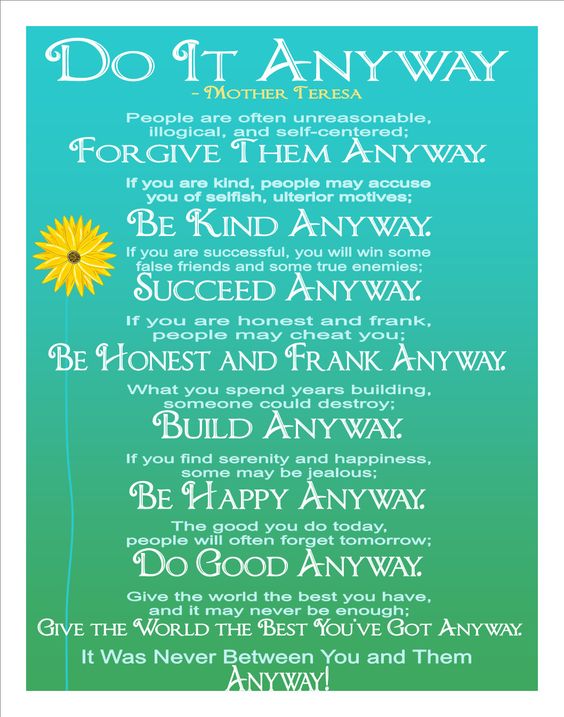
Mother Teresa

She chose me! A Journey of Faith and Divine Encounters

She chose me! A Journey of Faith and Divine Encounters

Today, I celebrate a very special anniversary and have decided to commemorate it with this short blog post. Eight years ago, on September 4, 2016, I was in Cartagena, Colombia, celebrating my good friend’s 40th birthday. On that same day, Mother Teresa was canonized by the Catholic Church and officially recognized as a saint, taking the title “Saint Teresa of Calcutta.”

This year, September 5, 2024, marks the 27th anniversary of her passing and is also her feast day. Reflecting on this, I am reminded of the profound impact she has had on my life and spiritual journey.

In 2013, I got divorced to make space for my soulmate. We found each other again at a Costco gas station, and I knew immediately that it was God who brought us back together. I wanted to spend the rest of my life with him. We started dating immediately, and one of the first questions he asked was whether I would ever marry again. I told him I would—I liked marriage but had just been married to the wrong person. However, I emphasized that the next time I got married, it would be through the church. A few months later, he asked if it had to be the Catholic Church. I told him I didn’t think so; I just wanted our marriage to be blessed. At that time, I was just beginning to return to my faith and the church.

In 2015, I was invited to a retreat by my friend’s sister, Nina. Although I had never been to a retreat before, I was intrigued because she was the third person to invite me. Without knowing why, I needed to go, I said “yes” and attended the retreat. In the words of Mother Teresa’s famous poem, “Do It Anyway,” I went anyway. During the retreat, the only question on my mind was about my future with my soulmate. I received my answer that weekend and knew that moving forward was what God wanted us to do. A few months later, I learned that the same retreat was being held for men, so I invited my soulmate to attend. According to him, he went just to make me happy, which it did. He came home from the retreat with the same fire for the Lord that I had. A few months later, he asked how he could receive Communion and convert to the Catholic faith. I want to emphasize that I never asked him to do this; it was a desire God placed in his heart. I explained that he would need to take classes and suggested we take them together since I still needed to receive the sacrament of Confirmation. I also mentioned that perhaps we should look into marriage prep classes to see if we were really ready for this step. Although we weren’t engaged yet, we lived together, and I just knew we were heading in that direction. We spoke with our pastor and enrolled in RCIA classes and marriage prep.

In 2016, as part of my preparation for Confirmation, I was asked to choose a Confirmation Saint. Although I grew up Catholic, my family didn’t speak much about the saints, so I wasn’t familiar with them. My pastor suggested I research them. One night, while browsing Netflix, I came across “The Letters,” a biographical drama released on December 4, 2015, that explores Mother Teresa’s life through her personal letters, focusing on her inner struggles and unwavering commitment to her mission. I knew of Mother Teresa, but I didn’t know much about her, so I decided to watch the film. Afterward, I remember thinking, “If only I could embody her love and commitment, I would love to be more like her.”

During our girls’ trip to Cartagena, my friend arranged for us to visit the Totumo Mud Volcano. While we were inside the volcano, I turned to chat with one of the women traveling with us, and suddenly, as I looked at her, I saw Mother Teresa. I blinked, trying to make sense of what I had just seen. The woman noticed and asked if I was okay. Hesitating, I told her that I had just had a strange vision of Mother Teresa. She looked surprised and said, “Really? Wow, I share her birthday, August 26.” I could hardly believe it. I had experienced so many “Godincidences” since beginning my journey back to faith that I was in awe and couldn’t stop sharing them with this woman. So much so that after dinner, our friend who was celebrating her birthday pulled me aside to tell me that her friend was an atheist. I laughed and said, “Well, apparently she’s enjoying my stories and hasn’t stopped me. Maybe there’s something she needs to hear?”

The following Sunday, back in Miami, we attended Mass at our home church,  St. Martha’s. After Mass, the announcements invited us to visit the gift shop for leftover Mother Teresa items from the previous week. I was curious and went to the gift shop, where they had Mother Teresa prayer cards, rosaries, and other gifts. I asked the volunteer why they had these items, and she explained, “They were left over from last week.” When I asked why, she said, “Weren’t you here? Last week was when Mother Teresa was canonized.”

That Sunday, I had missed Mass because of my girls’ trip. (Note that I don’t miss a Sunday now, even when traveling, but in 2016, I wasn’t where I am today.) The love I have for the Lord and my faith is so much greater now. Although I didn’t attend Mass that Sunday, Mother Teresa came to me, and that was the moment I knew who my Confirmation Saint would be. She chose me!

I purchased a gift for each of the women on that trip and mailed it to them with a brief overview of this story, thanking them for sharing that moment with me. Today, as we approach September 5, 2024—the 27th anniversary of Saint Teresa of Calcutta’s passing and her feast day—I remember that day inside the volcano with a smile and thank her for choosing me and for walking this journey of life with me.

Saint Teresa of Calcutta, pray for us!

🚀 Empowering Senior Professionals & Teams for Success 🚀About Vimari & Be Productive Coaching:

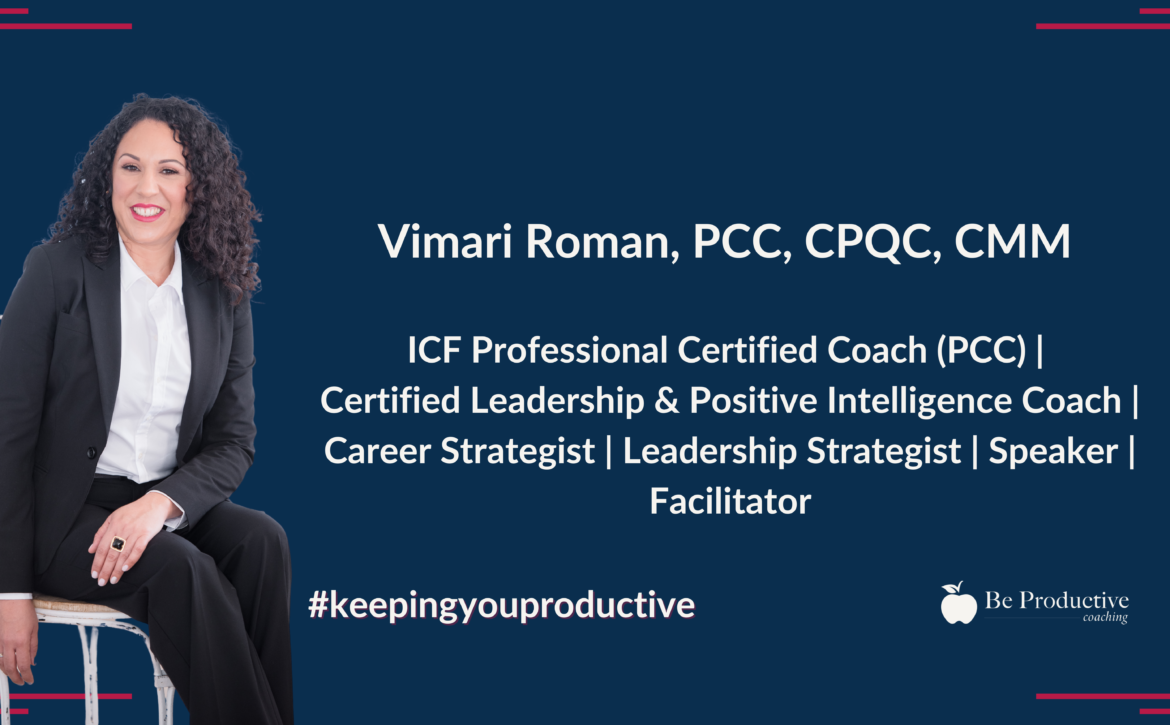
Vimari Roman, a Professional Certified Coach, serves as a catalyst for professional transformation, guiding individuals toward peak performance and fulfillment. With over two decades of experience in the Hospitality and MICE industries, including roles at Sonesta, LXR Luxury Resorts, Hilton Hotels, and Accor, Vimari transitioned into coaching driven by her passion for leadership empowerment.

Drawing on her extensive background in career strategies, leadership, and human behavior, she excels in helping professionals uncover their purpose and achieve career satisfaction. With over 25 years of leadership experience, Vimari has mentored and coached thousands of high-performing professionals across diverse industries, nurturing their unique abilities and fortifying their mental resilience, leading to peak performance, fulfillment, and growth.

Vimari is also certified as a Leadership and Positive Intelligence™ Coach. She is a sought-after speaker on topics such as Mental Fitness, Personal Branding, Purpose, and Career Strategies and Transitions. In 2019, LinkedIn recognized Vimari as a LinkedIn Career Expert. Additionally, she serves on the Board of the South Florida International Coaching Federation (ICF) Chapter and as faculty at 50/50 Women on Board, teaching the Personal Brand Workshop. Moreover, Vimari is an adjunct faculty at FAU, where she teaches the Certificate in Event Management program.

Know someone who could benefit from working with a coach specializing in executive & leadership coaching, career strategies, professional branding, positive intelligence, and mental fitness? Personal Introductions are the lifeblood of solopreneurship! www.beproductivecoaching.com

Digital Detox: How Unplugging Boosts Mental Wellness and Productivity

Digital Detox: How Unplugging Boosts Mental Wellness and Productivity

Digital Detox: How Unplugging Boosts Mental Wellness and Productivity

In today’s fast-paced digital world, a “digital detox” is more than just a trend—it’s essential for improving mental fitness, boosting productivity, and enhancing overall well-being. But what does unplugging really mean, and why is it so essential today?

A “digital detox” isn’t about completely disconnecting. Instead, it’s about creating a healthier relationship with technology that allows us to benefit from it while avoiding the pitfalls of constant connectivity.

The Impact of Constant Connectivity on Mental Health

We live in an era of information overload, where devices constantly demand our attention. This digital noise can lead to:

  • Cognitive Overload: Our brains struggle to handle the daily influx of information.
  • Mental Health Strain: Constant connectivity can contribute to feelings of stress and anxiety.
  • Productivity Challenges: Multitasking results in scattered attention and decreased efficiency.
  • Social Disconnection: Despite being “connected” online, many feel increasingly isolated.

This “technostress” can lead to burnout, reduced creativity, and overwhelming fatigue.

Benefits of a Digital Detox for Enhanced Productivity

Taking a digital break offers several benefits:

  • Enhanced Mental Clarity and Focus: Disconnecting helps declutter the mind, leading to sharper focus.
  • Boosted Creativity: Stepping away from screens opens the door to fresh ideas.
  • Improved Sleep Quality: Reducing screen time before bed improves sleep.
  • Lowered Stress and Anxiety: A break from devices significantly reduces stress.
  • Strengthened Relationships: Unplugging fosters meaningful face-to-face connections.
  • Increased Mindfulness: Time offline allows for self-reflection and goal-setting.

Effective Strategies to Unplug and Reconnect

You don’t have to go entirely off-grid to benefit from a digital detox. Here are some tips:

  • Set Digital Boundaries: Designate tech-free times, like during meals or the first hour of your day.
  • Practice Mindful Tech Use: Be intentional with app usage and manage notifications.
  • Engage in Offline Activities: Explore nature or pursue analog hobbies like reading or gardening.
  • Start Small: Begin with short unplugging sessions and gradually extend them.

Overcoming Challenges of a Digital Detox

Unplugging can be challenging, but you can overcome obstacles by:

  • Addressing FOMO: Remember that what’s truly important will still be there when you reconnect.
  • Managing Work Expectations: Communicate unplugging plans with colleagues and set boundaries.
  • Breaking Device Habits: Recognize that frequent checking is often a habit. Track usage to become aware of patterns.

Finding a Healthy Balance in a Tech-Dependent World

Technology is essential, but balance is key. To make unplugging sustainable:

  • Create a Routine: Establish a “digital sunset” an hour before bed.
  • Incorporate Mindfulness: Increase awareness of your tech use with mindfulness practices.
  • Balance Work and Breaks: Use techniques like the Pomodoro Method to alternate focused work with breaks.
  • Involve Your Community: Encourage family and coworkers to join you in unplugging.

Break Free from Digital Overload

In our hyperconnected world, unplugging is not just a luxury—it’s a necessity for maintaining well-being and productivity. Implement these strategies to create a healthier relationship with technology, allowing you to thrive both personally and professionally.

Remember, the goal isn’t to eliminate technology but to use it mindfully. Start small, be patient, and build habits that enhance your well-being in the digital age.

Ready to improve your mental health and productivity? Contact Be Productive Coaching today for personalized strategies on incorporating a digital detox into your life.

Please note: The advice in this article is for general informational purposes only and is not a substitute for professional medical advice or treatment.

Why Do People Hate Their Jobs So Much?!

Why Do People Hate Their Jobs So Much?!

Why Do People Hate Their Jobs So Much?!

In the frenetic world of corporate America, a startling number of individuals find themselves trapped in the grip of job dissatisfaction. The once-promising career path has transformed into a grueling nine-to-five drudgery, leaving many to ponder: Why do people hate their jobs so much? This pervasive sense of workplace unhappiness has become a critical issue, affecting not only individual well-being but also organizational productivity and economic growth. According to a recent report by the U.S. Bureau of Labor Statistics, job dissatisfaction costs American businesses over $550 billion annually in lost productivity and employee turnover. 

Common Causes of Job Hatred

The reasons behind job dissatisfaction are as diverse as the workforce itself. However, several key factors consistently contribute to the pervasive sense of professional misery:

Lack of Purpose and Meaning

Many employees experience a profound disconnect between their daily tasks and any sense of higher purpose. This professional purpose deficit can lead to a feeling of emptiness and futility in one’s work.

Poor Work-Life Balance

The constant struggle to juggle professional responsibilities with personal life often results in burnout and resentment towards one’s job. This imbalance can significantly impact mental health and overall life satisfaction.

Toxic Workplace Culture

A negative work environment, characterized by office politics, lack of support, and poor communication, can quickly turn a dream job into a nightmare. Workplace negativity spirals can be particularly damaging to employee morale

Insufficient Compensation and Benefits

Feeling undervalued and underpaid for one’s efforts is a major source of job dissatisfaction. When employees perceive a mismatch between their contributions and rewards, it can lead to decreased motivation and engagement.

Limited Growth Opportunities

Career stagnation and a lack of professional development prospects can leave employees feeling trapped and unfulfilled. The absence of a clear career path often results in a loss of occupational motivation.

Misalignment with Personal Values

When an individual’s values clash with those of their employer or industry, it can create a sense of moral discomfort and professional disenchantment.

The Psychology Behind Job Dissatisfaction

To truly understand the phenomenon of job hatred, we must examine the psychological factors at play:

Maslow’s Hierarchy of Needs in the Workplace

Abraham Maslow’s famous theory can be applied to the work environment. When basic needs such as job security and fair compensation are not met, employees struggle to reach higher levels of satisfaction and self-actualization in their roles.

The Impact of Unfulfilled Expectations

Many enter the workforce with high hopes and expectations. When reality fails to meet these ideals, it can lead to profound disappointment and disillusionment.

The Role of Intrinsic and Extrinsic Motivation

While extrinsic motivators like salary and benefits are important, intrinsic factors such as personal growth and meaningful work often play a more significant role in long-term job satisfaction.

Cognitive Dissonance in Career Choices

The mental discomfort experienced when one’s beliefs about one’s ideal career clash with the reality of one’s current job can contribute to ongoing dissatisfaction and stress.

The Consequences of Hating Your Job

Job dissatisfaction syndrome is not just a personal problem; it can have far-reaching consequences:

Mental Health Issues

Prolonged exposure to a disliked job can lead to stress, anxiety, and depression. Work-related depression is a growing concern in many industries.

Physical Health Problems

The mental toll of job dissatisfaction often manifests in physical symptoms, including headaches, fatigue, and a weakened immune system.

Decreased Productivity and Performance

Unhappy employees are typically less productive, which can impact both individual career prospects and overall company performance.

Negative Impact on Personal Relationships

The strain of job-related emotional exhaustion often spills over into personal life, affecting relationships with family and friends.

Career Stagnation and Missed Opportunities

Those stuck in jobs they hate may miss out on valuable opportunities for growth and advancement, further exacerbating their dissatisfaction.

Strategies for Improving Job Satisfaction

For those experiencing workplace unhappiness, there are several strategies to consider:

Self-Assessment and Goal-Setting

  • Take time to reflect on your values, strengths, and long-term career aspirations.
  • Set clear, achievable goals that align with your personal and professional objectives.

Developing New Skills and Competencies

  • Invest in continuous learning to enhance your value and open up new opportunities.
  • Seek out training programs or certifications that can broaden your skill set.

Improving Communication with Supervisors and Colleagues

  • Foster open dialogue with your superiors about your role and expectations.
  • Build positive relationships with coworkers to create a more supportive work environment.

Seeking Opportunities for Growth Within the Current Role

  • Look for ways to take on new responsibilities or lead projects that interest you.
  • Propose innovative ideas that can benefit both you and your organization.

Cultivating a Positive Mindset and Practicing Gratitude

  • Focus on the aspects of your job that you do enjoy, no matter how small.
  • Regularly acknowledge the positive elements of your work life to maintain perspective.

When to Consider a Career Change

Sometimes, despite best efforts, a job may simply be the wrong fit. Here are signs it might be time to move on:

  • Persistent feelings of dread or anxiety about work.
  • Lack of engagement or interest in your tasks.
  • Misalignment between your values and the company’s culture.
  • Limited growth potential within the organization.

Steps to prepare for a career transition include:

  • Conducting thorough research on potential new fields or roles.
  • Networking with professionals in your desired industry.
  • Updating your skills and qualifications as needed.
  • Creating a financial buffer to support your transition.

Overcoming fears and obstacles in career changes requires courage and careful planning. Remember that many successful professionals have navigated career shifts and emerged more satisfied and fulfilled.

Transform Your Career with Be Productive Coaching

Job dissatisfaction is a complex issue with no one-size-fits-all solution. However, by understanding its causes and actively working to improve our work lives, we can move towards greater fulfillment in our careers. Whether it’s through personal growth, workplace improvements, or bold career changes, there are always paths to a more satisfying professional life.

Remember, you’re not alone in facing these challenges. Many have successfully navigated the journey from job hatred to career contentment. If you’re struggling with job dissatisfaction, Be Productive Coaching can help you navigate your career challenges and find fulfillment in your professional life. By working with us, you can gain clarity on your career goals, develop strategies to overcome obstacles and build confidence to take control of your career. With the right guidance and support, you can transform your job from a source of stress and unhappiness to a source of joy and fulfillment. Don’t settle for a life of workplace misery – take the first step towards a more rewarding career by booking a free consultation with Be Productive Coaching today.

How Workplace Culture Affects Productivity

How Workplace Culture Affects Productivity

How Workplace Culture Affects Productivity

In today’s fast-paced business world, the link between workplace culture and productivity has become increasingly apparent. From the corner office to the cubicle farm, organizations are realizing that their company ethos can significantly impact the bottom line. But how exactly does the professional milieu influence output? Research suggests that a positive workplace culture, characterized by strong emotional and intellectual connections among employees, can lead to higher levels of engagement and productivity. For instance, Gallup’s findings indicate that employees who feel included and connected perform better and are more engaged. 

The Foundations of a Productive Workplace Culture

At its core, a productive workplace culture is built on a foundation of clearly defined core values and a compelling mission. When employees understand and align with these principles, it creates a powerful synergy that propels the organization forward.

Key elements of a productivity-enhancing culture include:

  • Strong leadership that inspires and motivates
  • Clear communication channels across all levels
  • A shared sense of purpose and direction
  • Recognition of individual and team contributions

Leadership styles play a crucial role in fostering productivity. Whether it’s the charismatic CEO or the supportive team leader, effective leaders set the tone for the entire organization. They create an environment where employees feel valued, empowered, and motivated to give their best.

Communication practices are equally vital. From the boardroom to the breakroom, how information flows through an organization can make or break its efficiency. Open, transparent communication fosters trust and ensures that everyone is on the same page, working towards common goals.

Employee Engagement and Its Effect on Output

Employee engagement is the lifeblood of productivity. When staff members are invested in their work and feel a strong connection to their organization, they’re more likely to go above and beyond in their roles.

Job satisfaction plays a significant part in this equation. Employees who find fulfillment in their work are naturally more productive. They’re not just clock-watchers; they’re active contributors who take pride in their accomplishments.

Motivation is another critical factor. Whether it’s intrinsic motivation driven by personal growth or extrinsic motivation through rewards and recognition, keeping employees motivated is key to maintaining high levels of productivity.

Recognition and reward systems can significantly boost morale and output. From a simple “thank you” to more formal acknowledgment programs, showing appreciation for employees’ efforts can have a profound impact on their performance.

Work Environment and Productivity

The physical workspace design has a direct influence on how employees work. The debate between open floor plans and traditional office layouts continues, but the key is creating an environment that supports the type of work being done.

Workplace flexibility has become increasingly important, especially with the rise of remote work. Organizations that offer flexible working arrangements often see improvements in both productivity and employee satisfaction.

Work-life balance is no longer just a buzzword; it’s a crucial component of sustaining long-term productivity. Companies that prioritize their employees’ well-being often reap the benefits of a more engaged and productive workforce.

Collaborative spaces can enhance teamwork and spark innovation. Whether it’s a dedicated brainstorming room or a casual meeting area by the water cooler, these spaces facilitate the exchange of ideas and foster creativity.

Organizational Learning and Innovation

In today’s knowledge-based economy, continuous learning is essential for driving productivity. Organizations that invest in employee development often see returns in the form of increased efficiency and innovation.

Knowledge management systems play a crucial role in preserving and sharing institutional wisdom. By making information easily accessible, these systems can significantly reduce the time wasted on reinventing the wheel.

Innovation is the lifeblood of many industries, and workplace culture can either nurture or stifle creative thinking. A culture that encourages risk-taking and values new ideas is more likely to stay ahead of the curve.

Cross-functional teams can be powerful engines of innovation and productivity. By bringing together diverse perspectives and skill sets, these teams can tackle complex problems and drive organizational success.

Diversity, Inclusion, and Cultural Intelligence

Diversity in the workplace isn’t just about ticking boxes; it’s about leveraging a wide range of perspectives to drive innovation and productivity. A diverse workforce brings varied experiences and viewpoints to the table, leading to more creative problem-solving and decision-making.

Creating an inclusive environment is crucial for maximizing the potential of a diverse team. When every employee feels valued and heard, regardless of their background, it fosters a sense of belonging that translates into higher engagement and productivity.

In our globalized world, cultural intelligence has become a valuable asset. Organizations that cultivate this skill among their employees are better equipped to navigate international markets and collaborate across borders effectively.

Managing generational differences in the workplace presents both challenges and opportunities. Each generation brings its own strengths and working styles. By understanding and leveraging these differences, organizations can create a more dynamic and productive work environment

Measuring and Improving Workplace Culture

To improve workplace culture, organizations need to first assess where they stand. There are various tools and methods available for this purpose, from employee surveys to more comprehensive cultural audits.

Key performance indicators (KPIs) for culture and productivity might include:

  • Employee engagement scores
  • Turnover rates
  • Productivity metrics
  • Innovation indices

Cultural transformation is no small feat, but it can yield significant returns. It requires commitment from leadership, clear communication of goals, and consistent effort over time.

Many organizations have successfully transformed their cultures, resulting in dramatic improvements in productivity. These case studies serve as valuable learning tools for others embarking on similar journeys.

The Role of Technology in Shaping Workplace Culture and Productivity

Digital tools have revolutionized how we communicate and collaborate in the workplace. From project management software to instant messaging platforms, technology has enabled new levels of efficiency and connectivity.

Artificial Intelligence (AI) and automation are reshaping workplace dynamics, taking over routine tasks and freeing up human workers to focus on higher-value activities. This shift requires a culture that embraces technological change and values continuous learning.

While technology offers numerous benefits, it’s crucial to strike a balance with human interaction. A culture that values face-to-face communication alongside digital tools can often achieve the best of both worlds.

In our interconnected world, cybersecurity has become a critical aspect of organizational culture. A strong cybersecurity culture not only protects sensitive information but also contributes to overall operational efficiency by preventing costly breaches and downtime.

Building a Culture that Boosts Your Bottom Line

For businesses looking to transform their workplace culture and boost productivity, at Be Productive Coaching, we offer expert guidance and tailored solutions. We can help you define your organization’s core values, model desired behaviors, and implement effective communication strategies to foster collaboration and teamwork. By investing in employee development and recognizing outstanding performance, we can assist you in creating a positive and inclusive work environment that empowers your workforce. Contact Be Productive Coaching today at assistant@beproductivecoaching.com or you may call +1 786 258 1335 to start your journey toward a more dynamic, engaged, and productive workforce. 

Vimari Roman, Executive Coach

Tips for your career’s next step!

Career Strategist & Coach

I help high-performing professionals – like you – transition into exciting jobs with higher earning potential and career satisfaction.

Tips to prepare for your next career transition! 

Whether you want to switch industries, climb the corporate ladder, or start your own business, we have valuable advice to help you succeed.

1. Define your goals: Before embarking on a career transition, it’s essential to clearly understand what you want to achieve. Ask yourself: What kind of work do I enjoy? What are my strengths and weaknesses? What are my long-term career aspirations? Once you have a solid understanding of your goals, you can build an action plan.

2. Assess your skills: Take inventory of your existing skills and identify any gaps that need to be filled. Acquiring new knowledge and skills can be achieved through various means, such as enrolling in courses, participating in workshops, or seeking mentorship opportunities. The more you can enhance your skill set, the better positioned you will be for your next career move.

3. Network: Building relationships with people in your desired industry can be incredibly valuable. Broadening your professional circle can enhance your career transition prospects. You can consider participating in industry events, enrolling in professional associations, and contacting relevant contacts on LinkedIn to expand your network. This will help you learn about job opportunities and gain insider knowledge about the industry you want to enter.

4. Update your resume: Your resume is your personal marketing tool, so make sure it’s up-to-date and tailored to your new career goals. Highlight the skills and experiences that are most relevant to your new career path.

5. Practice interviewing: Interviews can be nerve-wracking, so practice makes perfect. Prepare for potential job interviews by researching frequently asked questions and rehearsing your answers with a trusted confidant, such as a friend or family member. The more prepared you are, the more confident you will be in the actual interview.

6. Stay positive: Career transitions can be challenging, but staying positive and persistent is essential. Don’t be discouraged by setbacks or rejections. Rather than being disheartened by setbacks, utilize them as opportunities for growth and progress. Maintain your determination and continue making efforts towards accomplishing your objectives.

We hope these tips help you prepare for your next career transition. Remember that anything can be achieved through an appropriate mental attitude and adequate groundwork.

Tips to Avoiding Stress & Burnout.

Stress and burnout are common issues faced by many people in today’s fast-paced and demanding world. Taking care of yourself is crucial to avoid these problems and maintain a healthy work-life balance. Here are some valuable tips to help you prevent stress and burnout:

1. Prioritize self-care: Make sure to take time for yourself every day to relax and recharge. Whether going for a walk, taking a yoga class, or reading a book, prioritize what works for you.

2. Set boundaries: Learn to say no and set boundaries with your work and personal commitments. You can avoid overloading yourself with too many tasks and schedule time for rest and relaxation.

3. Practice mindfulness: Incorporate mindfulness practices such as meditation, deep breathing, or visualization into your daily routine. By incorporating these practices into your routine, you can effectively alleviate stress and enhance your overall state of well-being.

4. Connect with others: Social support is vital for mental and emotional health. You can allocate some time to connect with your loved ones or explore your hobbies and interests by joining a group or club.

5. Manage your workload: Break down tasks into manageable chunks and prioritize them based on importance. Could you consider delegating tasks to others, or discuss workload concerns with your supervisor?

Remember, taking care of yourself is essential for preventing stress and burnout. By implementing these tips, you can improve your overall well-being and maintain a healthy work-life balance. Stay tuned for next month’s newsletter to discuss ways to improve your productivity and focus.

Mental Fitness Bootcamp!

We are excited to announce that on the 13th of May, we will be hosting a Mental Fitness Bootcamp to help individuals improve their mental health and well-being.
The bootcamp will include exercises, sessions, and discussions to enhance your cognitive abilities and promote a healthy mindset.
Get ready to experience the 7 Weeks of Inspired Practice at our Mental Fitness Bootcamp:

Week 1: Boost Your Self-Command Muscle

Week 2: Your Judge

Week 3: Intercept Your Accomplice Saboteurs

Week 4: Shift From Saboteur to Sage

Week 5: Sage Muscle

Week 6: Boost Your Sage Powers

Bonus Week 7: Navigate and Sustain with Life and Work Applications

Our bootcamp is open to anyone looking to improve their mental health and well-being, whether you’re a student, working professional, or stay-at-home parent. By joining us, you’ll gain valuable knowledge and tools to help you lead a happier, healthier life.

The bootcamp will be held virtually, so you can attend from the comfort of your own home or office. To register, visit our website and sign up for the Positive Intelligence Mental Fitness Bootcamp.

How it Works

1. Watch a weekly 1-hour video session.

2. Attend weekly group coaching session

3. Practice for 15 min. every day on an exclusive Mobile App.

4. Track your daily progress and conquer your brain.

Curious about my training? Our next Crushin Mental Fitness Bootcamp starts May 13th. See below for more details.

We hope to see you there!

We’ve got one life to live. I choose to live mine fearless and free, at peace, and filled with hope and love. How about you? Have a memory that anchors you? ⚓ Share it with me…I’d love to hear it.

This work is life-changing! 

Click below to learn more:

https://beproductivecoaching.com/crushing-mental-fitness/

Is this for you? Listen to Beth’s testimonial.

Next Steps:

  • First step: Take the saboteur assessment to meet your top saboteurs. (Note that you will be asked for an email address, and we recommend you use the same email address you will use to receive information during the program and download the app). Once you take the assessment, you will receive three (3) emails from Shirzad Chamine, the founder explaining the work, and we recommend you read them. You will not receive any other emails after that from Positive Intelligence. All of the program information will come from Vimari. Here is the link for the assessment: Take the Free Saboteur Assessment

Are you a leader thinking of how to spend your 2023 Training & Development budget?

Elevate your team’s EQ by putting your Training & Development budget to work towards training that will be sustainable with our Positive Intelligence Powered Teams program. You can select any date, and we can start a private Co-Hort just for your team.
Learn more about it by clicking below:

https://beproductivecoaching.com/positive-intelligence-for-teams/

Tip of the month🌟

Practice self-compassion. When we make mistakes or face challenges, we often beat ourselves up and engage in negative self-talk. However, treating ourselves with kindness and understanding can help to reduce stress, anxiety, and depression.

Let’s meet in person at any of the following:

No alt text provided for this image
June 12-15, 2023: MPI WEC 

IN-PERSON | Coaching

Location: Riviera Maya

More details to follow

IN-PERSON Session | Elevate and Reinvigorate Your Personal Brand for Today’s Market!

Location: Riviera Maya

No alt text provided for this image
June 26-28, 2023: FICP Education Forum

IN-PERSON Session | Increase Your EQ with Positive Intelligence™

Location: Omni Amelia Island Resort

Date: June 27

Time: 3:30 pm – 5:00 pm ET

No alt text provided for this image
August 23-25, 2023: Meet Well Summit 

IN-PERSON | ONSITE SESSION

Session Title:  Burnout No More

Location: Opal Sands Resort, Clearwater Beach, FL

More details to follow

Are you coming to any of these conferences? Let’s connect! 

About Be Productive:

Founder Vimari Roman changes lives by helping professionals achieve peak performance and fulfillment through career strategies, coaching, professional branding, and mental fitness.

She began her career in Hospitality. After over 20 years, she realized she had outgrown her career; in 2013, she transitioned her skillset, earned her Certificate in Meeting Management, and started her first company, Be Productive Meetings & Events. After a great start, she felt that something was still missing. She went inward and discovered that she missed the coaching and leadership of her teams. A year later, in 2014, she received her Global Certificate in Leadership Coaching and founded Be Productive Coaching, a boutique firm based in Miami, Florida. With over twenty-five years of experience in leadership, Vimari has mentored and coached hundreds of high-performing professionals in various industries, amplifying their unique talents and strengthening their mental muscles to help them achieve peak performance, fulfillment, and growth.

Vimari is a Certified Leadership and Positive Intelligence Coach who speaks on Mental Fitness, Professional Branding, and Career Strategies and Transitions. She is a proud and engaged member of the South Florida ICF Chapter, and in 2019 she was recognized by LinkedIn as a LinkedIn Career Expert.

Know someone who could benefit from working with a coach specializing in career strategies, professional branding, positive intelligence, and mental fitness? Personal Introductions are the lifeblood of solopreneurship! www.beproductivecoaching.com

work life balance doesn't exist

Stop Stressing Over Work/Life Balance

work life balance doesn't exist

We have all heard the term “work/life balance.” It’s a catchphrase that has been used to describe an individual’s ability to balance the demands of work and life. Chances are that at some point in your life, you have tried achieving work/life balance as a goal, and I could almost bet that trying to achieve this balance has caused you quite a bit of stress. It’s caused you stress because, in reality, work/life balance does not exist. I am here to invite you to stop stressing over work/life balance and instead strive to achieve life balance. You may think this is the same, but it’s not. Most people seeking work/life balance are overworked, unhappy with their work, or are struggling with difficulties in their relationships inside or outside work, sometimes both.


If your work feels completely unrelated to the activities that stir your interest, enthusiasm, energy, and sense of meaning, then it may be time for you to transition to the next step of your career. While your work doesn’t need to satisfy all of your needs for purpose, meaning, social connection, and challenge, you should expect work to provide you with moments of satisfaction, accomplishment, and connection. If it doesn’t, then you do not need work/life balance…you need a new job, or you may need to change careers. 


However, if you are getting fulfillment and satisfaction from your work but feel that you just don’t have time for anything else, then that may mean you have to learn how to delegate or create boundaries. You may also need to establish priorities to learn how to integrate your personal and work life and ultimately find life balance.


Technology and work-from-home flexibility have contributed to much of this “off-balance” feeling. We work from home, and our devices are connected 24/7, which can adversely affect our mental health, emotional well-being, and relationships. So how do we disconnect, and how do we find this “life balance?”


Rewire Your Mindset:

Yes, mindset is key when seeking life balance. When life is busy, or all your energy is focused on a special project, it’s all too easy to find yourself off balance, not paying enough attention to important areas of your life. While you need to have the drive and focus if you’re going to get things done, taking this too far can lead to frustration and intense stress. We must understand that we are one person with many responsibilities and interests that can be balanced. The key here is that we are “one person” and to look at our life as one life vs. dividing our life into two different areas. You are one person that enjoys hobbies, family, a significant other, kids, pets, and work. Work is an integral part of your life, so why try to keep it separate? Keeping this division adds to our stress. Instead, I recommend integrating all of the areas of our life, including work and finding balance.


Integrate Life: 

Life integration will look very different for all of us. Work-life integration involves blending both personal and professional responsibilities. Rather than viewing work and personal time as separate entities, is finding areas of compromise. If you arrange your work and home lives, so they fit together to fulfill all your needs, you can create a life with time for your work and relationships, family, and outside interests. The advantage of life integration is freedom. When we integrate our life, we feel free, and our stress levels decrease. Integrating means that you are scheduling hours around your priorities and when things need to get done. It also means understanding productivity times and setting boundaries.


Set Boundaries:

When integrating life to find life balance, it is crucial to set boundaries. This means that to have work and personal life coexist, you must maintain firm boundaries between home and office, allowing you to devote your full attention to each at a given time. This means scheduling office hours, time for emails, and conference calls and the same goes for your personal items. 


Understand Priorities:

Prioritizing is key to a life balance. We must understand that sometimes our work will require a little more attention, and sometimes our home or personal life will require that extra attention. As one person, we could only do so much, so it’s important not to feel guilty when prioritizing what needs the most time and attention and enjoy the times when we are smooth sailing.


Here are some additional tips that may help:

🌟 Create time to reflect: go for walks after lunch, take advantage of slow periods, go on mini-vacations, turn off email notifications on weekends

🌟 Align your work with your purpose and passions: do work that moves you and understand you’re why

🌟 Utilize your talents: challenge yourself at work or raise your hand for a project that excites you

🌟 Find time for high-value activities: volunteer, run or walk a 5k, collect for your favorite charity, or take an art class

🌟 Invest in your relationships: create time for your family and friends; go to lunch or dinner; plan activities; make a phone call

🌟 Be flexible: know that life is not perfect and that even challenging times can provide a gift or opportunity to learn


The key to life balance is enjoying your life without having to separate or compartmentalize life. 

Want to learn more about following an integrated life balance approach to work and life without stress? Schedule a free consultation: www.beproductivecoaching.com/contact


About Be Productive:

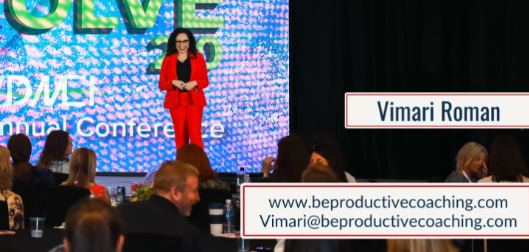
Speaking at WEC Annual Conference

Founder Vimari Roman changes lives by helping professionals achieve peak performance and fulfillment through career strategies, coaching, professional branding, and mental fitness.

She began her career in Hospitality, and after over 20 years, she realized she had outgrown her career; in 2013, she transitioned her skillset, earned her Certificate in Meeting Management, and started her first company, Be Productive Meetings & Events. After a great start, she felt that something was still missing. She went inward and discovered that she missed the coaching and leadership of her teams. A year later, in 2014, she received her Global Certificate in Leadership Coaching and founded Be Productive Coaching, a boutique firm based in Miami, Florida. With over twenty-five years of experience in leadership, Vimari has mentored and coached hundreds of high-performing professionals in various industries, amplifying their unique talents and strengthening their mental muscles to help them achieve peak performance, fulfillment, and growth.

Vimari is a Certified Leadership and Positive Intelligence Coach who speaks on Mental Fitness, Professional Branding, and Career Strategies and Transitions. She is a proud and engaged member of the South Florida ICF Chapter, and in 2019 she was recognized by LinkedIn as a LinkedIn Career Expert.

Know someone who could benefit from working with a coach specializing in career strategies, professional branding, positive intelligence, and mental fitness? Personal Introductions are the lifeblood of solopreneurship! www.beproductivecoaching.com

Disconnecting Mental Fitness Tip

Disconnecting is Being Productive

Disconnecting Mental Fitness Tip

Disconnecting is being productive, but nowadays, with so many of us attached to our phones and working from home, being able to disconnect is difficult, and it takes a conscious effort.

It is no wonder why burnout, mental health, and wellbeing are hot topics these days. And that’s because we are not disconnecting!

I get it … as an entrepreneur with a Hyper-Achiever mind, it’s extremely difficult for me to find moments of silence which is why I treasure my escapes to nature.

My last escape took place in September. I had been non-stop from April to early August, and by the time my schedule slowed down, I felt exhausted, and no matter the amount of sleep or PQ reps, I could not relax. That’s when I decided to turn a wedding weekend into a 10-day road trip with my hubby and chocolate Labrador Zeke. Our trip felt like a late summer vacation that was much needed and perfectly timed, avoiding the rush of summer travel. And I’ve been so clear and productive since I return that I couldn’t help but want to share these tips with you.

Besides increased productivity, the benefits of disconnecting are endless and include:

🌟 Increased focus and concentration

🌟 Lowered stress and anxiety

🌟 Increased creativity

🌟 Higher energy levels

🌟 Better life balance

But in the midst of all that we have going on, how do we disconnect without feeling guilt or FOMO?

The answer: By setting healthy boundaries!

Here are my tips for setting boundaries so that you can disconnect:

1️⃣ Communicate and delegate before disconnecting so that your employer, employees, or clients know that you will be offline.

2️⃣ Turn on your out-of-office and turn off your work notifications.

3️⃣ Get out in nature and turn off your phone or put it on airplane mode for as long as possible.

You can, of course, do any other activity that you enjoy, but I highly recommend just being out in nature to truly disconnect. Other activities may require brain work, and you may not get the necessary recharge. I find that being quiet and still are the best ways to disconnect.

About Be Productive:

Speaking at WEC Annual Conference

Founder Vimari Roman changes lives by helping professionals achieve peak performance and fulfillment through career strategies, coaching, professional branding, and mental fitness.

She began her career in Hospitality, and after over 20 years, she realized she had outgrown her career; in 2013, she transitioned her skillset, earned her Certificate in Meeting Management, and started her first company, Be Productive Meetings & Events. After a great start, she felt that something was still missing. She went inward and discovered that she missed the coaching and leadership of her teams. A year later, in 2014, she received her Global Certificate in Leadership Coaching and founded Be Productive Coaching, a boutique firm based in Miami, Florida. With over twenty-five years of experience in leadership, Vimari has mentored and coached hundreds of high-performing professionals in various industries, amplifying their unique talents and strengthening their mental muscles to help them achieve peak performance, fulfillment, and growth.

Vimari is a Certified Leadership and Positive Intelligence Coach who speaks on Mental Fitness, Professional Branding, and Career Strategies and Transitions. She is a proud and engaged member of the South Florida ICF Chapter, and in 2019 she was recognized by LinkedIn as a LinkedIn Career Expert.

Know someone who could benefit from working with a coach specializing in career strategies, professional branding, positive intelligence, and mental fitness? Personal Introductions are the lifeblood of solopreneurship! www.beproductivecoaching.com